Alabama Vegetable Planting Guide: Dates for North and South Zones
Alabama’s long growing season is an advantage, but it also makes planting dates easy to misjudge. North Alabama’s spring warms later and fall cools sooner than the coast, while summer heat can cut short the window for cool-season crops statewide. Use the regional calendar below as a starting point, then adjust for your soil, weather and crop.
How Alabama’s planting regions affect dates
“North” and “South” are useful shortcuts, not precise lines on a map. Central Alabama sits between them, and local conditions can shift planting time further. A garden in a low, shaded spot may stay cool after a sunny hillside has warmed; a coastal bed may remain mild later into fall than an inland one.
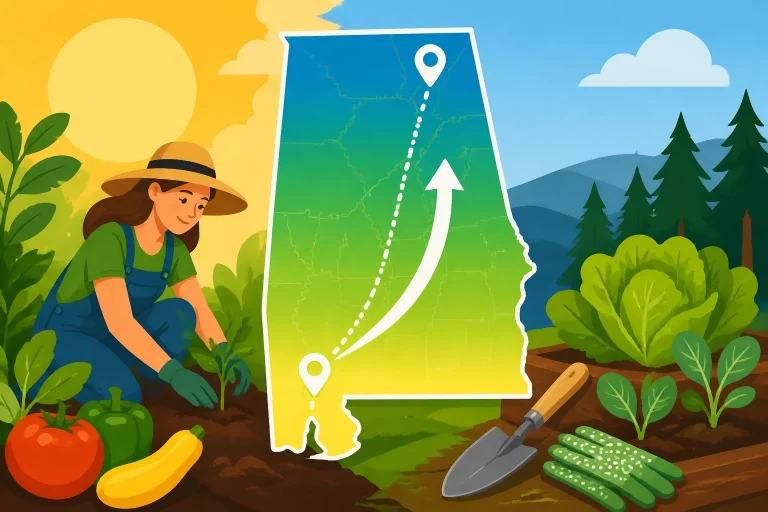
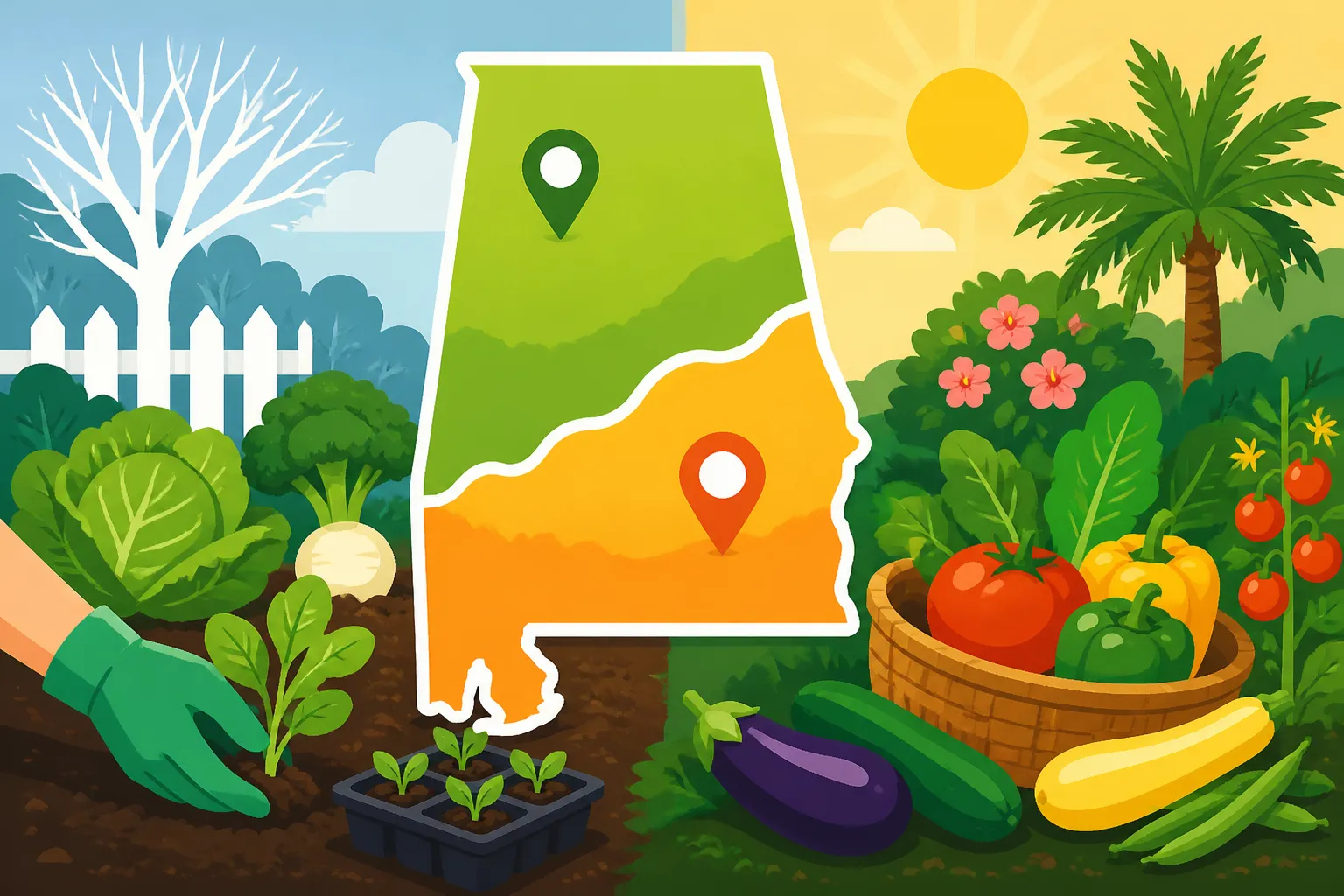
For vegetable planting, think of the state as a gradual change from the cooler Tennessee Valley and northern hills through central Alabama to the warmer southern counties and Gulf Coast. A crop that is ready to sow in South Alabama may need to wait in North Alabama. In fall, the timing reverses: northern gardeners usually need to sow earlier to give crops time before cold weather.
These planting regions are different from USDA Plant Hardiness Zones. Hardiness zones describe the average annual extreme winter minimum for an area; they do not provide a vegetable planting calendar or predict the weather in a particular season. If you need a zone for a perennial or fruit tree, see Checking Your Alabama Plant Hardiness Zone by ZIP Code Map.
Frost is another important consideration, but an average first or last frost date is a probability, not a promise. The date varies from year to year, and one neighborhood can experience different conditions from a nearby weather station. Rather than treating a date as a firm boundary, use it alongside current forecasts, soil temperature, crop tolerance and the amount of time a crop needs to mature. Alabama First Frost Dates: Estimating Fall Harvest by Weather Station explains how station-based estimates can help with fall planning.
The basic timing difference
The broad pattern is simple:
- North Alabama: Spring planting often starts later, and fall crops usually need to be sown earlier.
- Central Alabama: Many crops fit between northern and southern windows, but elevation, shade and local weather still matter.
- South Alabama: Spring can begin earlier, and the fall growing window may extend later, though intense summer heat still affects cool-season crops.
A regional calendar is not a promise that a crop will thrive on the first day listed. It is a practical window for deciding when to prepare beds, start seeds or watch conditions. The most reliable approach is to combine regional timing with the crop’s preferred temperature and its days to maturity. For help making that calculation, see Using Days to Maturity and Sowing Dates to Plan Alabama Harvests.
| Planning factor | North Alabama | Central Alabama | South Alabama |
|---|---|---|---|
| Spring warm-up | Usually later | Intermediate, with local variation | Often earlier |
| Spring cool-season crops | Sow as soil and weather allow; the useful window may close sooner as heat arrives | Use early spring conditions, then watch for rising temperatures | Can often begin earlier, but warm weather may arrive quickly |
| Spring warm-season crops | Wait for settled warmth and suitable soil | Plant after local frost risk has eased and soil is warm | Often ready earlier, provided the soil is warm |
| Fall cool-season crops | Start earlier to allow time before cold weather | Use an intermediate schedule | Often can be started later, but summer heat may delay germination |
| Main adjustment | Avoid waiting too long for fall crops | Follow local conditions | Avoid assuming mild winters prevent summer heat problems |
Spring planting calendar for Alabama vegetables
Spring planting is a sequence, not a single start date. Cold-tolerant vegetables can go in while the weather is still cool, but heat-loving crops need warmer soil and safer conditions. Planting everything at once can leave early crops exposed to cold and later crops sitting in chilly, wet soil.
Late winter and early spring: start with cool-season crops
As winter begins to loosen its hold, prepare beds for crops that tolerate cool growing conditions. Peas, spinach, radishes, turnips and many leafy greens are commonly planned for an early-season sowing. Onion crops and potatoes also fit into the cool-season planning period, with the right timing varying across the state and by how each crop is planted.
A bed that is workable but still cold can slow germination. Wet ground can be a problem too: walking on or digging into saturated soil can compact it and make later seedbeds harder to manage. Check the soil before planting. It should crumble rather than smear or form a sticky clump when handled.
In North Alabama, allow spring temperatures to settle before assuming the growing season has begun. In South Alabama, an earlier start may be possible, but a warm spell does not guarantee that a sudden cold snap is over. Use the forecast for your area and be ready to protect vulnerable crops if cold weather returns. The timing differences between regions are discussed in How Planting Dates Change Across Alabama’s Regions.
Some crops also need the cool part of spring to make good growth before the weather warms. Spinach and lettuce, for example, can bolt, or send up a flower stalk, when days become hot. Sowing them too late may produce a short harvest even if seedlings emerge successfully. How Quick Spring Heat Causes Alabama Greens to Bolt Early covers this common timing problem.
Mid-spring: move toward warm-season crops
As the soil warms and cold risk declines, Alabama gardeners can shift attention toward warm-season vegetables. Beans, corn, cucumbers, squash, melons, okra, tomatoes, peppers and eggplant are among the familiar crops that need more warmth than early spring greens. Planting them into cold soil can lead to slow emergence, uneven growth or stress.
South Alabama gardeners may reach suitable conditions earlier than gardeners farther north. Central Alabama usually follows an intermediate pattern. North Alabama gardeners should be patient when soil is still cool, even if daytime temperatures have turned pleasant. Soil temperature and overnight conditions matter as much as a warm afternoon.
Tomatoes and peppers are often set out as transplants rather than direct-sown into the garden. Their roots still need warm soil, and the plants need protection from cold. Starting seed indoors can help with timing, but seedlings need adequate light and careful hardening off before they move outside. For transplant timing, compare Starting Tomato Seeds Indoors for an Alabama Spring with Safe Planting Dates for Tender Transplants After Spring Freezes.
Late spring: fill the garden without rushing
Once warm-season crops are growing, late spring is a good time to complete plantings that need warmth, fill gaps and plan succession sowings. Beans and squash can be planted in more than one round rather than all at once, helping spread harvests and reducing the risk of a single planting maturing during a difficult spell of weather.
Do not assume that planting later always makes a crop safer. A delayed planting may miss a cold snap but face intense heat, drought stress or pest pressure as the season advances. The aim is to match each crop to a useful growing window, not simply to wait for the warmest possible weather.
For spring dates by crop and region, Alabama Vegetable Planting Guide: Dates for North and South Zones is the central reference point for this calendar. More detailed regional planning is available in Alabama Planting Guide: Shifting Dates from South to North.
Spring crops: what to sow or transplant and when
A calendar becomes more useful when it is organized by crop needs. The table below gives broad planning windows, not guaranteed dates. Use it to identify the season to prepare for, then narrow the timing with local weather, soil warmth and the instructions on the seed packet or plant tag.
| Crop group | North Alabama planning window | Central Alabama planning window | South Alabama planning window | Main timing cue |
|---|---|---|---|---|
| Peas, spinach, radishes and early greens | Late winter through early spring | Late winter through early spring | Winter into early spring | Sow while conditions remain cool; avoid delaying until heat builds |
| Turnips and other cool-season roots | Early spring | Winter into early spring | Winter into early spring | Use workable soil; keep the seedbed evenly moist |
| Potatoes and onions | Late winter into spring | Late winter into spring | Winter into early spring | Follow crop-specific guidance and local soil conditions |
| Beans and sweet corn | Mid to late spring | Mid-spring | Early to mid-spring | Wait for warm soil and settled weather |
| Cucumbers, melons and squash | Late spring | Mid to late spring | Mid-spring | Sow after soil warms; protect young plants from pests |
| Tomatoes, peppers and eggplant | Mid to late spring for transplants | Mid to late spring | Early to mid-spring for transplants | Wait for warm soil and reduced cold risk |
| Okra and southern peas | Late spring into summer | Mid to late spring | Spring into summer | Sow into warm soil |
| Fall greens and brassicas | Start in summer | Start in summer | Late summer into fall | Work backward from the expected end of the growing window |
Direct sowing and transplanting
Direct-sown crops go into the garden as seed. Many roots, peas, beans, corn, cucumbers, melons and squash are commonly sown this way, though crop needs differ. Transplants are started elsewhere or purchased as young plants and then set in the bed. Tomatoes, peppers, eggplant and many brassicas are often grown from transplants.
Direct sowing avoids transplant shock and is convenient for crops with sensitive roots. It also means that seeds must germinate under the conditions in the garden. A very hot, dry seedbed can be as challenging as one that is cold and wet. Keep the seedbed consistently moist during emergence, without leaving it waterlogged.
Transplants can give gardeners a head start, but they are not automatically ready for the garden when they appear at a nursery. Choose sturdy plants, inspect them for damage or signs of pests, and acclimate indoor-grown seedlings gradually to outdoor sun and wind. Planting a tender transplant into cold soil or full afternoon sun before it is hardened off can set it back.
If you are deciding which crops to start as seed and which to buy or raise as plants, see Which Vegetables to Direct-Sow and Which to Transplant in Alabama. For practical choices when setting up a first garden, Starting an Alabama Vegetable Garden: Seeds, Transplants, or Beds covers the trade-offs.
Allow for local differences within each region
A calendar cannot account for every yard. Consider these adjustments before planting:
- Elevation and exposure: Higher or more exposed sites may remain cool longer than sheltered low ground.
- Shade: A garden shaded in the morning may warm more slowly, while strong afternoon sun can dry the surface quickly.
- Soil texture and drainage: Heavy or wet soil warms and dries differently from loose, well-drained soil.
- Coastal influence: Coastal conditions can differ from inland sites, but a mild winter does not remove the need to watch soil warmth and summer heat.
- Forecasts: A forecast can help you decide whether to delay a tender planting or protect it from an approaching cold spell.
The small-scale effects of these conditions matter most near the beginning and end of a crop’s preferred season. For more on these site effects, see How Elevation, Shade, and Coastal Wind Shift Alabama Microclimates.
Summer planting and the transition to fall crops
Alabama’s summer is not an empty stretch between spring and fall. Heat-loving crops can continue growing, and gardeners can start another planting of certain vegetables. But summer heat also challenges germination, young plants and gardeners. A seed may fail to emerge in a hot, dry bed even when the calendar says the crop is in season.
Keep warm-season crops productive
Warm-season vegetables such as okra, southern peas and some beans can be part of a summer plan. Depending on the crop and local conditions, gardeners may also make additional sowings of beans, squash or corn. Plan each planting around the time it needs to mature, the expected weather during establishment and the space available.
Succession planting means sowing small amounts at intervals rather than planting the whole crop at once. It can spread harvests and reduce the likelihood of having too much produce mature together. The interval depends on the crop and your household’s needs; use the seed packet’s maturity information and the growing conditions to set a practical schedule. Succession Planting Beans and Greens in Alabama explains how to use this approach.
Keep an eye on moisture. The top layer of soil can dry quickly during hot, sunny weather, and newly sown seeds need moisture to germinate. At the same time, frequent shallow watering may wet only the surface, leaving roots with little moisture once they grow deeper. For young plants, check the bed rather than relying only on a fixed watering routine. How Often to Water Emerging Garden Seedlings in Alabama Heat discusses seedling care during hot weather.
Mulch can help limit evaporation and moderate soil temperature, but do not bury small seedlings or cover the seed row before emergence. Apply it with care around established plants and adjust it to the crop’s growth stage. See Mulching Alabama Vegetable Gardens to Block Weeds and Cool Soil for guidance on using mulch in vegetable beds.
Start fall crops before fall feels close
A frequent planning mistake is waiting for cooler weather before sowing fall vegetables. Many fall crops need weeks of growth before temperatures drop, so their seeds or transplants often need to be started during summer. The challenge is that summer heat can inhibit germination or stress young plants. Use shade, consistent moisture and careful timing to help them establish, but avoid sowing so late that they cannot mature before cold weather.
North Alabama gardeners generally need to begin fall planning earlier than South Alabama gardeners. Central Alabama falls between them. In each region, work backward from the crop’s expected maturity and the likely end of its growing window. Treat those estimates as flexible rather than exact: a hot spell can delay emergence, while an early cold period can shorten the harvest.
The general method is:
- Choose the crop and check its days to maturity.
- Decide how much time it needs to reach a useful harvest stage.
- Add time for slow emergence, transplant establishment or a difficult spell of weather.
- Count backward from the local period when cold is likely to limit growth.
- Sow or set out the crop when the soil and weather allow it to establish.
For a closer look at this calculation, see Counting Back from First Frost: Timing Fall Vegetables by Maturity and Calculating Fall Sowing Dates from First Killing Frost. These estimates are planning tools, not guarantees.
Fall planting calendar for Alabama
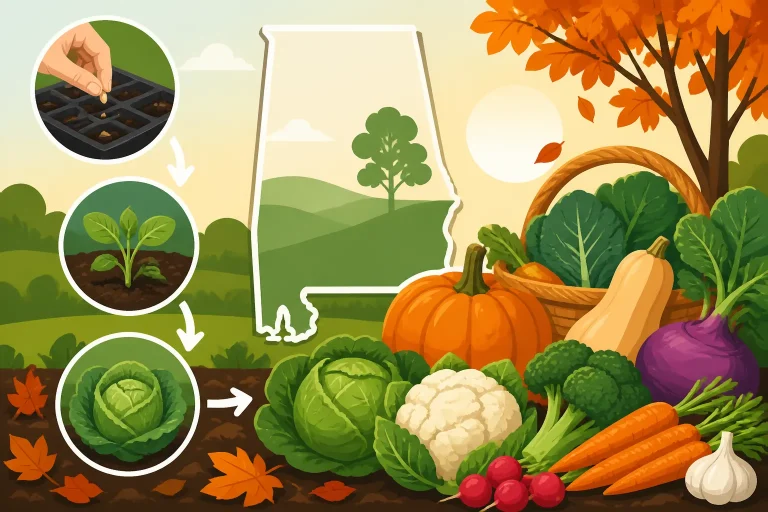
Fall offers another growing season for crops that prefer cool weather. The calendar is especially useful for greens, roots and brassicas, but the dates depend on the region, the length of time each crop needs and how it handles heat and cold. Since fall crops are often started when summer is still intense, planning should begin before the weather feels autumnal.
| Fall crop group | North Alabama planning approach | Central Alabama planning approach | South Alabama planning approach |
|---|---|---|---|
| Cabbage, broccoli and cauliflower | Start or set out plants during summer so they can establish before colder weather | Use a summer-to-early-fall transition, adjusted for crop maturity | Plant during the later warm season as conditions allow |
| Collards, kale and mustard | Sow or transplant early enough to size up before cold | Use an intermediate schedule; avoid letting summer heat stall establishment | A later planting may fit, but allow time for growth |
| Lettuce, spinach and other tender greens | Start as temperatures begin easing; protect from abrupt cold as needed | Sow as heat declines, with attention to soil moisture | Use the longer mild season, but wait for conditions suitable for emergence |
| Carrots, beets, turnips and radishes | Sow early enough for roots to develop before the coldest part of the season | Plan around maturity and the local cooling pattern | A longer fall window may allow later sowing |
| Garlic | Plant in the fall according to regional guidance | Use local guidance for the bed and planting period | Follow South Alabama timing rather than northern dates |
Brassicas need a head start
Broccoli, cabbage and cauliflower are often grown from transplants for fall harvest. The plants need time to establish and grow before cold weather limits their development. Sowing or setting out transplants too late can leave plants small, while planting during the hottest weather can stress them. Shade and steady moisture may help young plants establish, but they do not make the calendar irrelevant.
Collards, kale and mustard greens are commonly included in fall plans. Their tolerance and growth habits differ, so do not treat them as interchangeable. Some gardeners want tender leaves for repeated picking; others are growing plants for larger mature leaves. Decide what kind of harvest you want and plan the sowing date around that goal. See Planting Collards, Kale, and Mustard: Alabama Spring and Fall Dates and When to Plant Broccoli, Cabbage, and Cauliflower Across Alabama.
Roots and greens depend on a good seedbed
Root vegetables are easiest to sow into loose, even soil where seedlings can emerge without crusting or obstruction. Radishes usually mature relatively quickly, while carrots and beets need more time. Keep the upper soil moist until seedlings are established. If the surface dries or forms a crust, germination can become uneven.
Leafy greens need careful fall timing too. Seed may struggle to germinate during hot weather, so gardeners may need to protect the seedbed from harsh sun and keep it from drying. Once temperatures ease, seedlings often establish more readily. A succession sowing can extend harvest, but only if there is enough time for each round to grow.
The exact mix of crops is a personal choice. A gardener with limited space may prioritize quick greens and radishes; a gardener with a longer cool-season window may reserve room for slower crops. When to Sow Peas, Radishes, and Spinach for Alabama Harvests and Sowing Beets, Carrots, and Turnips on Spring and Fall Schedules offer crop-focused timing information.
Plan for cold without assuming the garden will stop
A light frost may damage tender growth, while hard freezes can harm crops that tolerate only mild cold. Protection can extend the harvest window, but it cannot make every crop safe in every cold event. Row covers and other covers may help, provided they are suited to the conditions and installed securely. Check local forecasts and understand the limits of the protection method you use.
For details on choosing what to harvest and how to respond to a cold forecast, see Protecting Fall Crops From the First Alabama Freeze and What to Pick Before an Alabama Freeze: Protecting Tender Vegetables. In North Alabama, prepare for colder conditions sooner than you might in the southern part of the state. Along the coast, do not assume that every winter will be mild enough for unprotected crops.
Make the calendar work in your garden
A regional planting guide is most useful when it supports decisions rather than replaces them. Keep a simple record of sowing dates, emergence, harvest and weather. After a season or two, you may notice that one bed warms faster, a certain crop bolts early, or a later succession produces better than the first attempt.
Use seed packets as crop-specific guidance
Seed packets and plant tags can provide useful details such as sowing depth, spacing, maturity and temperature preferences. Follow those instructions for the specific crop and cultivar, since a general regional calendar cannot account for every difference. If the packet’s recommended timing conflicts with a local weather pattern, consider whether your garden is unusually warm, cool, wet or exposed.
Days to maturity are an estimate, not an appointment. A crop may take longer if it germinates slowly, grows under stress, or experiences cool conditions. A transplant’s maturity estimate may also be counted from a different point than a direct-sown crop. Read the seed packet carefully and use the number as a planning aid rather than a guarantee.
Prepare beds before the planting window
Waiting until the ideal planting week to repair a bed can make the season feel rushed. Before sowing, remove weeds, clear old crop debris and check drainage. If the bed needs soil improvement, do so before planting rather than trying to make major changes around growing roots. Raised beds and containers can be useful where ground soil is compacted or drains poorly, but they may dry faster and require closer moisture checks. Raised Beds vs In-Ground Plots for Poor or Compacted Alabama Soils compares those options.
Do not add fertilizer or other amendments by guesswork. Soil needs differ, and unnecessary inputs can create problems rather than solve them. For advice on assessing soil conditions, see Guide to Testing Garden and Lawn Soil pH and Routine Nutrients and Interpreting Alabama Soil Reports: Lime Rates, pH, and Nutrients.
Protect young crops from the conditions that matter most
New seedlings and recent transplants are more vulnerable than established plants. For each planting, consider:
- Cold: Tender crops may need to wait or be covered if a cold spell is forecast.
- Heat: Cool-season seeds may fail to establish during a hot stretch.
- Dryness: Seedlings have small root systems and need close attention to moisture.
- Heavy rain: Saturated soil can interfere with roots and seedling growth.
- Pests: Young plants can be damaged before they are large enough to recover.
A cover can protect a crop from some conditions, but it can also trap heat or rub against leaves if it is poorly suited or left in place when conditions change. Check plants and covers regularly. For frost-specific options, Covering Tender Garden Plants During an Alabama Frost Advisory outlines practical considerations.
Match the plan to how much you can harvest
A planting calendar is not only about when to sow; it is also a way to avoid harvesting more than you can use. Plant a manageable amount, then add a second sowing if the first is thriving and you have room. This is particularly helpful for crops that mature quickly or produce heavily over a short period.
If you garden in containers, the calendar still matters, but container soil may heat and dry faster than ground beds. Choose containers with adequate drainage and check moisture more often during hot periods. Vegetables That Thrive in Patio Containers Across Alabama and Watering Alabama Container Vegetables During Midsummer Heat can help adapt a regional schedule to a small space.
The best calendar for a particular garden is therefore a combination of regional timing, crop requirements and observation. Start with the North, Central or South Alabama window, check the weather and soil, and adjust when conditions make the suggested timing unsuitable.
Frequently Asked Questions
Are North and South Alabama planting dates the same as hardiness zones?
No. North and South are broad gardening regions used to account for differences in seasonal timing. USDA Plant Hardiness Zones describe average annual extreme winter minimums and are mainly useful when choosing perennial plants. Neither system can predict the weather in a particular season.
Should I plant as soon as a warm spell arrives?
Not necessarily. A warm spell can be followed by cold weather, and soil may remain chilly even when afternoons feel warm. For tender crops, consider soil warmth, overnight forecasts and local conditions before planting. Cool-season crops may be more appropriate early in the season.
When should I start fall vegetables?
Start planning in summer. Many fall crops need time to establish before cold weather, and their sowing or transplanting window can arrive while summer heat is still strong. Use the crop’s maturity information and your region’s likely cooling pattern to count backward.
Can one calendar work for every Alabama garden?
Use one as a starting point, not a fixed schedule. Local elevation, shade, soil and coastal influence can shift conditions within the same broad region. Record what works in your garden and adjust future sowings accordingly.
Disclaimer
This article is for general informational purposes only and does not constitute professional advice. Laws, prices and regulations vary by location and change over time. Consult a qualified professional for guidance on your specific situation. Alabama Gardening Guide is not a government agency and is not affiliated with any university extension, state department of agriculture or other government agency.