Alabama Planting Calendar: Year-Round Vegetable Gardening Guide
Alabama gardeners can grow vegetables in every season, but a calendar that works on the coast may miss the mark in the north. Heat, cold snaps, soil warmth, and crop maturity all affect when to sow or transplant. This guide lays out a flexible year-round schedule, explains regional shifts, and shows how to adjust planting plans when the weather does not follow the calendar.
How to Use an Alabama Planting Calendar
A planting calendar is a planning tool, not a promise that a crop will thrive on a particular day. In Alabama, the same month can bring very different conditions across the state. A cool spell may delay a northern planting, while warm southern soil can be ready for a crop earlier. Even within one town, a sunny raised bed can warm sooner than a shaded, damp garden plot.
For each crop, plan around four things:
- The crop’s preferred growing conditions. Cool-season vegetables do best in mild weather. Warm-season crops need warm soil and are vulnerable to cold.
- Your region’s usual weather pattern. North Alabama generally faces colder winter conditions and later spring warming than the southern part of the state.
- The time from planting to harvest. Seeds and transplants do not take the same amount of time to produce a crop.
- Your garden’s actual conditions. Soil temperature, drainage, shade, and exposure to wind can shift a useful planting window.
Rather than treat a printed date as a deadline, think in terms of a window. For example, a window may open when soil is workable and the risk of a damaging cold spell has eased. It may close when summer heat arrives and makes a cool-season crop prone to bolting, poor heading, or bitter leaves.
Use frost information as a risk estimate
Average frost dates describe probabilities, not fixed annual events. A frost date does not guarantee that frost will occur on that day, nor does it rule out a cold night outside the average period. For a useful estimate, look up the relevant local weather station and the probability associated with its date. The date varies from year to year, and a nearby station may not reflect a garden’s elevation, exposure, or cold-air drainage.
Use frost information to plan tender crops, but combine it with the forecast and the crop’s cold tolerance. A frost-tolerant leafy green and a tender tomato transplant should not be managed by the same rule. For more on interpreting local station information, see Alabama First Frost Dates: Estimating Fall Harvest by Weather Station and How to Read Last Spring Freeze Dates on Weather Station Tables.
Know what “planting” means for each crop
Some vegetables are best direct-sown where they will grow. Root crops such as carrots can be difficult to transplant without disturbing the developing root. Other crops, including many brassicas, can be started in a protected spot and moved into the garden as transplants. Warm-season crops such as tomatoes are commonly started from transplants, while beans are often sown directly into warm garden soil.
When you read a calendar, check whether the recommended window refers to sowing seed, starting seed indoors, or setting out a transplant. Those are separate steps. A calendar that says to plant tomatoes in the garden does not necessarily mean that it is time to sow tomato seed indoors.
The crop’s days to maturity can also be counted from different starting points, depending on the seed packet or transplant information. Read the packet carefully, and use maturity time as an estimate rather than a guaranteed harvest date. Using Days to Maturity and Sowing Dates to Plan Alabama Harvests explains how to connect those details to a harvest plan.
Regional Shifts Across Alabama
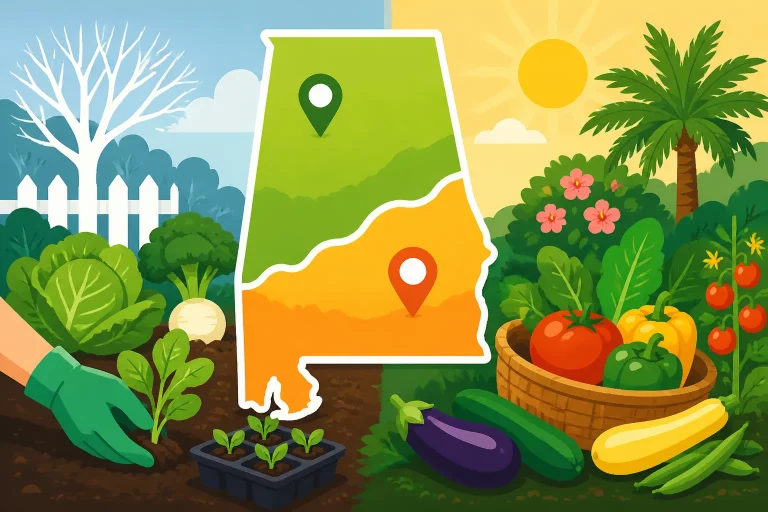
Alabama’s planting windows shift from the Tennessee Valley and northern hills through central areas to the Gulf Coast. A statewide calendar is useful for broad planning, but it cannot replace local observation. For a more detailed look at these differences, see How Planting Dates Change Across Alabama’s Regions.
| Region | What commonly shifts the calendar | Planning approach |
|---|---|---|
| North Alabama and the Tennessee Valley | Winter cold and spring temperature changes can delay tender plantings; fall cool-season crops have a shorter run before cold weather. | Protect early plantings when needed, wait for suitable soil warmth for tender crops, and avoid leaving fall sowing too late. |
| Central Alabama and the Black Belt | Conditions can fall between northern and southern patterns, but soil type, drainage, and local exposure make a large difference. | Use regional guidance as a starting point, then adjust for heavy or wet soil and the garden’s microclimate. |
| South Alabama and the Wiregrass | Warmer conditions can allow earlier warm-season planting and a longer fall growing period, but summer heat can arrive quickly. | Make use of warm soil, and plan fall crops around heat management as well as the first freeze risk. |
| Coastal Alabama | Mild southern conditions can support late-season gardening, though humid weather, rainfall, and local site conditions still affect results. | Use coastal-specific planting windows and watch for heat, wet soil, and disease pressure. |
These are broad patterns, not guarantees for every yard. A garden in a low spot may collect cold air even when the surrounding neighborhood stays warmer. A raised bed can warm faster than a heavy in-ground plot, but it can also dry faster. A coastal garden exposed to wind can behave differently from a sheltered yard a short distance inland.
North Alabama
In northern areas, spring warmth can arrive unevenly. A sunny week may tempt gardeners to set out tender crops, followed by a cold night that slows or damages them. Cool-season vegetables are often the safer early choices. Give the soil time to become workable, and protect young plants when a cold forecast threatens.
Fall planting also takes careful timing. Cool-season crops need enough time to establish and develop before the colder part of the season. For regional advice, Tennessee Valley Vegetable Planting Calendar by Crop Season and First Killing Freeze Dates Across Northern and Southern Alabama can help frame local planning.
Central Alabama and the Black Belt
Central Alabama is not one uniform growing area. Soil texture, drainage, elevation, shade, and distance from open water can all affect planting. Heavy soil that holds water may stay cool and difficult to work after rain. On a raised bed or better-drained site, the same crop may be ready sooner.
If your garden is in the Black Belt, use a regional schedule as a starting point and adapt it to your soil and site. Black Belt Gardening: Adapting Central Alabama Planting Schedules covers that regional perspective. Avoid working wet soil just because the calendar says it is time; working it when it is saturated can damage its structure.
South Alabama and the coast
Southern Alabama generally offers more opportunity for late-season vegetable growing, but warmth is not always an advantage. Cool-season seeds can struggle in hot soil, and seedlings may wilt or stall in intense sun. For fall crops, prepare beds ahead of time and pay close attention to moisture while seeds germinate.
Coastal gardeners can use Coastal Alabama Planting Guide: Timing Crops for Warm Southern Falls as a regional companion. It is still important to check the forecast and inspect soil conditions: a warm regional pattern does not mean every bed is ready on the same day.
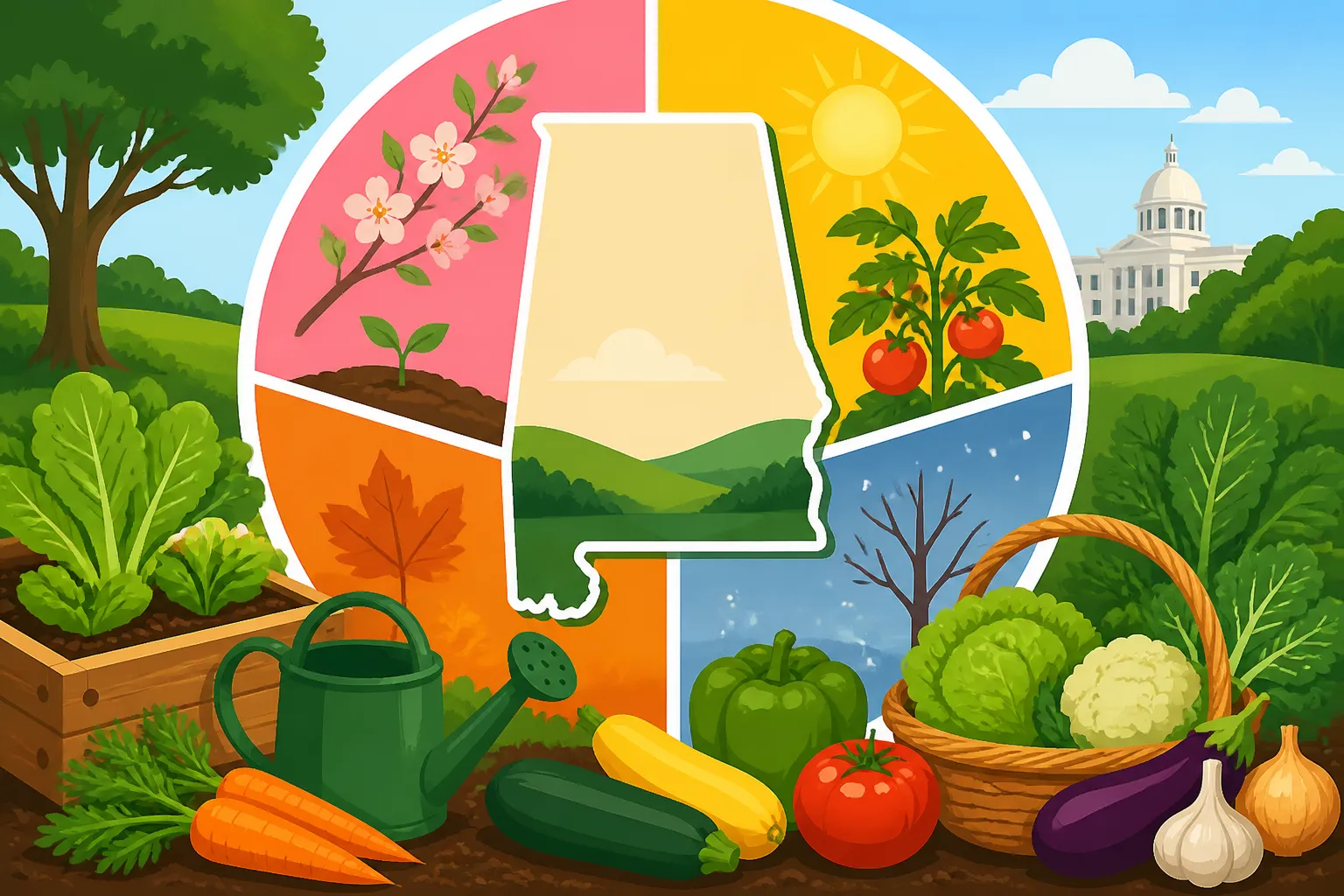
Month-by-Month Vegetable Gardening Calendar
This calendar describes seasonal opportunities rather than fixed planting dates. Use it alongside a local forecast, crop instructions, and regional guidance. If a crop’s usual window has passed, check whether a shorter-maturing selection or a later planting method might still fit; do not assume that every missed window can be recovered.
| Month | Seasonal focus | Possible garden tasks |
|---|---|---|
| January | Planning and protected growing | Review seed supplies, plan crop rotation, prepare beds when soil is workable, and protect existing cool-season crops during cold snaps. |
| February | Early cool-season planting | Consider cool-season sowing when soil and weather allow; prepare for spring transplants and avoid working saturated soil. |
| March | Spring crops and transition planning | Continue cool-season plantings where conditions suit; prepare warm-season beds without rushing tender transplants. |
| April | Spring transition | Sow or transplant warm-season crops when local conditions are suitable; keep cool-season harvests going where they have not bolted. |
| May | Warm-season growth | Maintain warm-season crops, sow heat-tolerant choices, and plan fall beds before summer heat becomes difficult to work in. |
| June | Heat management | Harvest regularly, water consistently, and start organizing a fall garden plan while monitoring the weather and soil. |
| July | Fall garden preparation | Prepare beds and begin fall crop planning; protect young seedlings from heat and drying conditions. |
| August | Late-summer sowing | Sow suitable fall vegetables in stages, manage moisture carefully, and use shade or other protection when conditions are harsh. |
| September | Fall planting and harvest | Continue cool-season sowings and transplants, harvest summer crops, and watch local forecasts for cold weather. |
| October | Cool-season gardening | Grow leafy crops and other suitable fall vegetables; consider garlic planting according to regional guidance. |
| November | Late-season growing | Keep harvesting hardy crops, protect vulnerable plants when cold threatens, and clean up spent summer crops. |
| December | Winter care and planning | Harvest what remains, protect selected crops, maintain beds, and plan the next season without disturbing wet soil. |
January
January is often a planning and maintenance month, but it need not be a month without vegetables. In a mild period, established cool-season crops may continue growing. In colder areas, protecting plants from sharp temperature drops can matter more than sowing new seed.
Use the quieter stretch to sketch bed layouts, note where crops grew last season, and decide which plant families should move to a different bed. Remove unhealthy debris rather than leaving it among future crops. If you want to sow early, check regional recommendations and soil conditions first; cold, wet ground is not a good seedbed.
February
As days lengthen, gardeners may be able to begin early cool-season sowings, depending on their region and the weather. Peas, radishes, spinach, and other cool-season crops can be considered when conditions are appropriate. Timing varies across the state, so a planting window for the coast may be too early for a northern garden.
Early planting is not the same as planting into unsuitable soil. If the bed is waterlogged, cloddy, or cold, wait for it to become workable. A short delay is usually better than sowing seed that sits in poor conditions.
March
March is a changeover month. Cool-season crops may still be productive, while warm-season planting plans are getting closer. The temptation to set out tomatoes, peppers, and other tender crops early can be strong after a warm spell, but a brief return to cold weather can set them back.
Prepare warm-season beds by clearing old plant material and checking drainage. If you are starting crops indoors, make sure seedlings receive adequate light and are hardened gradually before they move outside. Spring Seed-Starting Schedule for Alabama Gardeners can help coordinate indoor starts with later outdoor planting.
April
April is often a busy spring planting period, especially for warm-season crops, but the calendar should not override cold risk. Make sure the planting area and forecast suit the crop. A tender transplant exposed to cold soil and chilly nights may sit still rather than grow.
Keep cool-season vegetables going as long as they remain productive. Harvest leafy crops before they become tough or begin to bolt. Where a bed is becoming too warm for greens, clear it and prepare for summer crops rather than continuing to sow a crop that is likely to struggle.
May
By May, warm-season crops are usually the focus in many gardens. Beans, cucumbers, squash, melons, and other heat-loving vegetables can be part of the plan when the soil is warm enough and the local weather supports active growth. Continue checking for early pests and keep new plants from drying out.
This is also a good time to think ahead. Summer heat makes garden work more demanding, and fall crops will need prepared beds and an organized sowing plan. Clear space as early crops finish and avoid waiting until the hottest part of summer to decide what the fall garden will include.
June
June brings heat and strong growing conditions for many warm-season crops, but it can also stress plants and gardeners. Harvest frequently so crops do not become overmature. Check soil moisture rather than relying on a fixed watering schedule; rain, soil type, container size, and plant maturity all change how quickly a bed dries.
Start planning the fall garden now. Decide which crops will be direct-sown and which will need transplants. Make space in the garden and identify where you can water young seedlings consistently. Prepping Midsummer Alabama Beds for Fall Crops Under July Sun offers more on getting beds ready before fall sowing begins.
July
July is a preparation month for fall vegetables, even if outdoor conditions make the garden feel like a poor place for cool-season seed. Work on beds when soil conditions allow, and prepare a plan for keeping seedlings evenly moist. Heat can dry the surface quickly, and a seedbed that dries between waterings may produce uneven germination.
For crops started in trays, choose a location where seedlings can receive light without being scorched or allowed to dry out. For direct-sown crops, consider temporary shade or another suitable method to reduce stress. The aim is not to eliminate summer heat but to help young plants establish through it.
August
August is a key month for fall vegetable planning, particularly in areas where the late-season garden needs time to grow before cold weather. Conditions are still hot, so germination and early growth can be challenging. Sow in stages if appropriate for the crop, and pay close attention to the bed surface after sowing.
Do not assume that a seed is failing just because it takes longer than it would in cooler weather. But do check whether the soil is too dry, crusted, or waterlogged. A protected seedling may establish better than one exposed to intense afternoon sun. For regional timing, August Fall Vegetable Sowing Across Central and North Alabama and South Alabama Fall Planting Dates for Brassicas and Root Vegetables provide more focused planning.
September
September can offer a better balance for fall crops as temperatures begin to ease, though heat can linger. Continue sowing and transplanting suitable cool-season vegetables according to local timing. Keep summer crops productive where they remain healthy, but make room for fall plantings before the season gets too short.
A fall calendar should work backward from the expected cold risk and the crop’s development time. A slow-growing crop planted late may produce leaves but fail to reach a useful harvest stage. Counting Back from First Frost: Timing Fall Vegetables by Maturity explains how to estimate a planting window without treating an average date as a guarantee.
October
October is a productive month for many fall gardens. Cool-season vegetables can benefit from milder conditions, and established plants may develop well before deeper cold arrives. Continue to monitor local forecasts, especially for tender crops or newly set transplants.
Garlic is commonly planned as a fall crop, but the best timing differs across Alabama. Follow regional recommendations rather than applying one statewide date. See Planting Garlic in the Fall Across North and South Alabama Beds for a closer look at regional timing and October Planting Calendar for Alabama Cool-Season Crops for additional fall tasks.
November
November is a transition toward winter gardening. Hardy crops may continue producing, while tender vegetables become more vulnerable to cold. Harvest mature crops before a forecast cold event if they are unlikely to tolerate it. Covering can help in some situations, but it does not make every crop safe through every freeze.
Use open beds for suitable late-season planting only when the crop has a realistic chance to establish. Clean up summer debris, remove plants that are diseased, and add organic matter to beds according to your soil needs. November Planting Calendar: What Alabama Gardeners Can Still Sow offers more late-fall planning ideas.
December
December is usually better suited to harvesting, protecting, and planning than to starting a large new garden. In milder parts of the state, some crops may continue growing. In colder areas, growth slows and plants may need protection when cold weather threatens.
Avoid walking or tilling in waterlogged beds. Keep notes on which crops produced well, which struggled in heat, and which planting windows worked for your garden. Those observations are more useful than trying to follow a statewide schedule without adjustment.
Match Crops to Their Season
A reliable garden calendar groups crops by the conditions they prefer. The labels “cool-season” and “warm-season” are broad, but they help explain why a crop can thrive in one part of the year and struggle in another.
| Crop group | Examples | General timing approach | Common challenge |
|---|---|---|---|
| Cool-season leafy crops | Lettuce, spinach, mustard greens | Grow during mild periods; avoid sowing into intense heat. | Heat can trigger bolting, bitterness, or poor growth. |
| Cool-season roots | Beets, carrots, radishes, turnips | Sow when soil conditions suit the crop and keep the seedbed evenly moist. | Crusted or drying soil can interfere with emergence. |
| Brassicas | Broccoli, cabbage, cauliflower, collards, kale | Plan for spring or fall windows, with regional adjustment. | Heat can reduce quality; cold can slow young plants. |
| Warm-season fruiting crops | Tomatoes, peppers, eggplant | Set out only when cold risk has eased and conditions support growth. | Cold soil or cold nights can stall or damage plants. |
| Warm-season cucurbits | Cucumbers, melons, summer squash | Sow or transplant into warm conditions, leaving room for their growth habit. | Poor timing, heat stress, and pest pressure can shorten production. |
| Heat-loving crops | Okra, Southern peas | Use warm-season conditions; allow enough space and maintain moisture during establishment. | Early planting into cool soil may lead to weak establishment. |
Cool-season crops
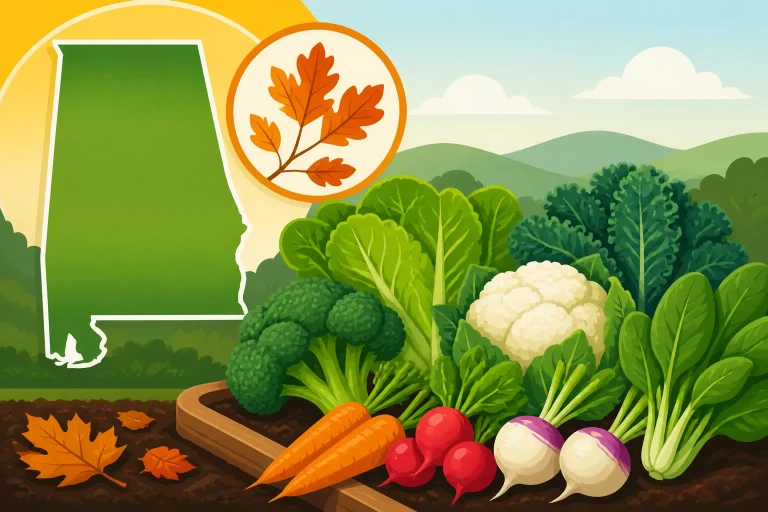
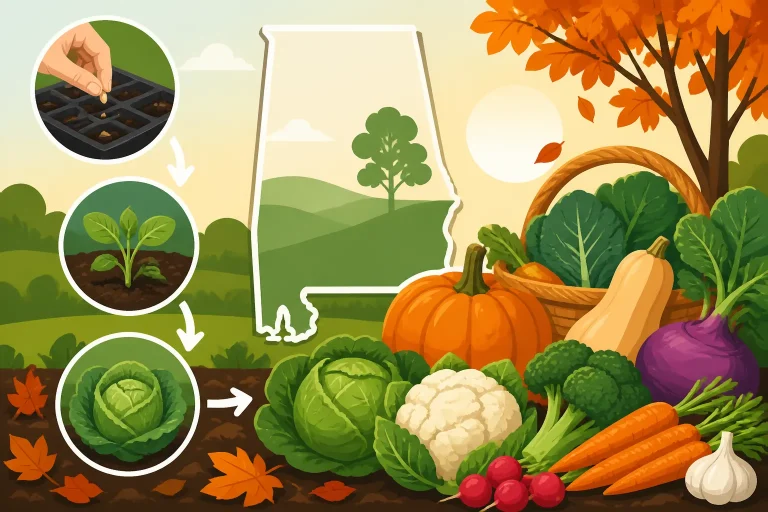
Cool-season vegetables are most productive in mild weather. They can be planted for spring or fall harvest, but the two seasons require different planning. In spring, warming weather can arrive quickly, shortening the period before leafy crops bolt. In fall, seeds may be sown during hot weather, so establishing seedlings becomes the first challenge.
Lettuce, spinach, radishes, peas, and many brassicas need individual timing. Some tolerate light cold better than others, and crop parts differ in their response: a mature plant may handle conditions that damage a small seedling. Use crop-specific guidance when choosing both the planting window and any protection.
For crop-by-crop guidance, see When to Plant Greens, Brassicas, and English Peas Across Alabama and When to Plant Broccoli, Cabbage, and Cauliflower Across Alabama. For the risk of spring heat arriving before greens are ready, How Quick Spring Heat Causes Alabama Greens to Bolt Early is also useful.
Warm-season crops
Warm-season vegetables need warmth to establish and grow well. Planting them early can save little time if cold soil slows growth or a late cold snap damages young plants. Wait for suitable local conditions rather than using a single date for the entire state.
Tomatoes, peppers, eggplant, beans, cucumbers, squash, and melons do not all have identical needs. A tomato transplant and a bean seed may be ready for the garden under different conditions. Check whether a crop is intended for direct sowing or transplanting, and allow room for mature plants when laying out the bed.
If you are choosing between seeds and transplants, Which Vegetables to Direct-Sow and Which to Transplant in Alabama explains the distinction. Crop-specific guidance is available for Planting Cucumbers, Melons, and Summer Squash in Alabama and Starting Peppers and Eggplant Indoors for Alabama Spring Planting.
Fall vegetables need a backward plan
For a fall harvest, start with the likely local cold window, then work backward by the crop’s expected maturity time. Add flexibility for slow germination or growth during hot weather. A packet’s maturity estimate is not a promise, and summer stress can delay establishment.
For direct-sown crops, plan for the time needed to germinate and grow from seed. For transplants, account for the time they need to establish after being set out. A crop planted just before cold weather may survive but produce little harvest if it has not had time to develop.
This is especially important for crops that need to form a head or develop a substantial root. Calculating Fall Sowing Dates from First Killing Frost gives a method for estimating that window, while Setting Out Fall Cabbage Transplants for Heading Before Frost focuses on one crop.
Build a Calendar Around Your Garden
A useful planting calendar is personal. Once you know the broad regional windows, adjust them to your garden’s soil, light, drainage, and available time.
Check the bed before sowing
Good timing cannot compensate for poor seedbed conditions. Before sowing, check whether the soil is workable and whether the surface can hold enough moisture for germination without staying saturated. A bed that is too wet may compact under foot or tool pressure. A bed that dries rapidly may need closer attention after seed is sown.
Raised beds and containers can help gardeners manage soil and access, but they have trade-offs. Raised beds often drain well and can warm earlier, while also drying faster. Containers have limited soil volume and may need more frequent moisture checks than in-ground beds. For a comparison, see Raised Beds vs In-Ground Plots for Poor or Compacted Alabama Soils and Vegetables That Thrive in Patio Containers Across Alabama.
Make a simple planting record
A notebook or spreadsheet can help you learn what works without making the process complicated. Record:
- Crop and variety
- Whether you sowed seed or planted a transplant
- Approximate planting period
- Bed location and amount of sun
- Weather conditions during establishment
- First harvest and how long the crop remained productive
- Problems such as bolting, poor germination, or pest damage
The goal is not to build a perfect record. A few notes can reveal that one bed warms early, one stays too wet after rain, or a spring crop consistently bolts before it reaches a useful size.
Use succession planting selectively
Succession planting means sowing a crop in more than one batch, rather than planting the entire supply at once. It can spread harvests and reduce the chance of ending up with more produce than you can use at one time. It works best when the next sowing still fits the crop’s seasonal window.
For a short-lived crop such as radishes or some leafy greens, repeated sowing can be practical while conditions remain suitable. It is less useful to keep sowing a cool-season crop after heat has made good growth unlikely. In fall, later sowings need enough time to mature before cold weather.
Leave room for new sowings when planning the bed. A small open strip or a cleared area after an early crop finishes can make succession planting much easier. Succession Planting Beans and Greens in Alabama provides additional ideas for coordinating repeated plantings.
Prepare for heat and cold, not just planting dates
Weather protection can extend a planting window, but it cannot erase every risk. Shade may help young seedlings through harsh late-summer conditions. Row covers or other suitable coverings may provide protection during some cold events, but the degree of protection depends on the material, how it is installed, and the weather.
Check the forecast before covering crops and remove or adjust coverings when conditions call for it. Keep tender transplants in suitable condition before planting, and water new plants according to the soil’s needs. For more on cold protection, see Protecting Fall Crops From the First Alabama Freeze and Frost Protection Tips for Alabama’s Mild Winters.
Keep crop rotation in mind
Planting the same crop family in the same bed year after year can encourage some soilborne problems. When space allows, rotate related vegetables into different beds and avoid following one crop with a close relative. For example, tomatoes, peppers, and eggplant belong to the same broad crop family, so changing only the vegetable name does not create a full rotation.
Rotation can be difficult in a small garden, especially if there is only one sunny bed. In that case, use the space as carefully as possible, remove unhealthy plant material, and pay attention to recurring problems. Rotating Crop Families Yearly to Prevent Soil Disease Buildup offers further guidance.
Common Calendar Mistakes and How to Adjust
Even a carefully planned schedule can go off course. The best response is usually to identify what is limiting the crop and adjust the next planting rather than keep repeating the same date.
Planting by the month instead of by conditions
A month name is a convenient reminder, but it does not tell you whether soil is too cold, too wet, or too hot. A warm week in spring may look like the start of summer, while a cold night can still interrupt growth. Use the calendar to know what to consider, then make the decision based on the garden and forecast.
Sowing cool-season crops too late in spring
A crop can germinate successfully and still fail to produce well if temperatures rise before it matures. If spring greens bolt early, try an earlier sowing within a suitable local window, select a site with helpful afternoon shade, or shift the main planting to fall. Do not keep adding seed as temperatures climb and expect the same quality harvest.
Starting fall seeds in hot, dry soil
Late-summer sowing can be difficult because the soil surface dries quickly and young seedlings are vulnerable. Prepare the bed before sowing, water carefully, and consider temporary shade where appropriate. If a crop is more practical as a transplant, start it under conditions that allow steady growth and move it when it is ready.
Setting out tender transplants too soon
A transplant that has grown well indoors still needs a gradual transition to outdoor conditions. Sudden exposure to full sun, wind, or cold can cause stress. Harden seedlings gradually, and check the weather before planting. If conditions are unsuitable, holding a transplant briefly in a healthy state may be better than putting it into a cold or saturated bed.
Treating every part of Alabama as one climate
A statewide schedule cannot account for each local difference. A planting window for South Alabama may be too early for North Alabama. Even within one region, a garden on an exposed slope can behave differently from a sheltered yard. Use the closest relevant regional schedule and adjust it with your own observations.
Sowing too much at once
A large planting may create a short, overwhelming harvest. Smaller batches can make harvest and kitchen use easier, especially for crops that mature quickly. But repeated sowing only works when the next batch will still grow under suitable conditions. Check the remaining seasonal window before planting another round.
Ignoring the crop’s maturity information
Days to maturity helps with planning, but the number is an estimate. It may be counted from sowing or transplanting, and it assumes conditions that may not match your garden. Use it to compare options and plan backward from a target harvest period, not as a guaranteed date.
Frequently Asked Questions
Can vegetables be planted in Alabama year-round?
Some form of vegetable gardening is possible in every season, but not every crop can be planted at any time. Cool-season crops suit mild periods, while warm-season vegetables need warmth. In winter, growth may slow and some crops need protection, especially in colder parts of the state.
Is one Alabama planting calendar accurate everywhere?
No. North Alabama, central Alabama, South Alabama, and coastal areas have different patterns of cold, heat, and growing-season length. Use a regional calendar as a starting point, then adjust for local weather, soil, drainage, and garden exposure.
Should I plant on the date shown on a calendar?
Treat a date as a planning cue, not a fixed instruction. Check whether the soil is workable, whether conditions suit the crop, and what the forecast suggests. Frost dates are probabilities and vary from year to year.
How can I plan a fall vegetable garden?
Choose crops suited to fall conditions, check their expected maturity time, and work backward from the likely local cold window. Start preparing beds before summer heat makes the work difficult, and pay close attention to moisture when seeds are sown in hot weather.
What should I do if I missed a crop’s planting window?
Check whether a shorter-maturing option or a later planting method is still suitable for your region. If conditions are no longer right, switch to a crop that fits the remaining season instead of trying to force one that is likely to struggle.
Disclaimer
This article is for general informational purposes only and does not constitute professional advice. Laws, prices and regulations vary by location and change over time. Consult a qualified professional for guidance on your specific situation. Alabama Gardening Guide is not a government agency and is not affiliated with any university extension, state department of agriculture or other government agency.