Planning an Alabama Fall Vegetable Garden from Sowing to Frost
An Alabama fall vegetable garden can produce greens, roots, beans and brassicas, but its calendar is easy to misread: seeds face late-summer heat before crops face frost. Plan backward from your likely harvest window, adjust for your region and give seedlings careful attention while they establish. The result is a practical sowing plan that makes better use of both the warm days and the cool weeks ahead.
Build the calendar backward from harvest
Fall planting is not simply spring planting moved to another month. In spring, a crop starts in cool weather and grows as days warm. In fall, it often starts in hot, dry weather and must grow quickly enough to mature as temperatures fall and daylight shortens. Both ends of that transition matter.
Start by identifying the crops you want to eat and whether you plan to direct-sow seed, set out transplants or use both. Then work backward from the period when you want to harvest. A crop that needs a long growing period generally has to start earlier than a quick crop such as radishes, but sowing too early may expose tender seedlings to stressful heat. A good fall calendar balances those competing demands.
For each crop, collect four pieces of information:
- The crop’s preferred growing conditions. Cool-season crops can tolerate cooler weather, but many still need warmth to germinate and establish. Heat-sensitive seedlings may struggle if sown too early into hot, dry soil.
- Days to maturity. Use the seed packet or plant tag as a planning estimate, not a guarantee. Check whether the count begins at sowing or transplanting. The time to a usable harvest can also vary with weather, soil, water and the size of the transplant.
- Your likely frost window. Frost is a risk window, not a calendar appointment. Local weather stations and regional records can help you estimate it, but conditions vary from year to year. Alabama First Frost Dates: Estimating Fall Harvest by Weather Station explains why station choice matters.
- A buffer for slow growth. Shortening days and cooling temperatures can slow development. Leave more room in the plan for crops that must reach full size before a cold spell, and consider choosing varieties with a shorter maturity period where suitable choices are available.
A simple backward-planning method works well:
- Choose a realistic harvest goal, such as picking young greens over several weeks or harvesting heads before a hard freeze.
- Find the maturity estimate for the variety you intend to grow.
- Count backward from the desired harvest period to estimate a start period.
- Adjust that start period for the method: direct-sown crops spend time germinating, while transplants have already developed beyond the seedling stage.
- Compare the estimated start period with your region’s planting guidance and the likely heat conditions.
- Add a succession sowing for quick crops if you want a longer harvest rather than one large flush.
- Recheck the plan as weather changes; a forecast can alter what is sensible to sow this week.
The estimate is a starting point. If a packet lists maturity from transplanting, using that same number from the date you sow indoors will underestimate the full time required. If a packet lists days from sowing, adding the indoor seedling period again may overestimate it. Read the wording, and keep a note of when each batch was sown or transplanted.
Seed packets from Botanical Interests and other suppliers can be useful for checking maturity estimates, spacing and sowing depth, but the packet’s timing is not a local frost forecast. Use it alongside Alabama regional guidance, such as Alabama Vegetable Planting Guide: Dates for North and South Zones and Counting Back from First Frost: Timing Fall Vegetables by Maturity. For an overview of the regional shifts, see How Planting Dates Change Across Alabama’s Regions.
Use your region as the starting point
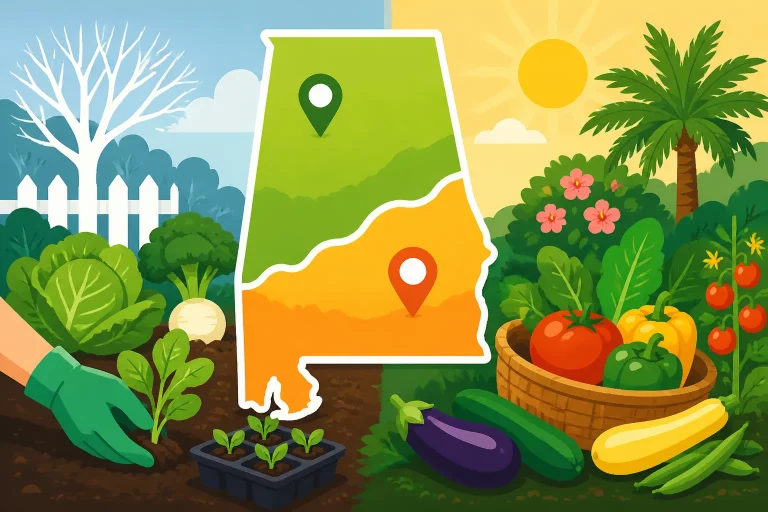
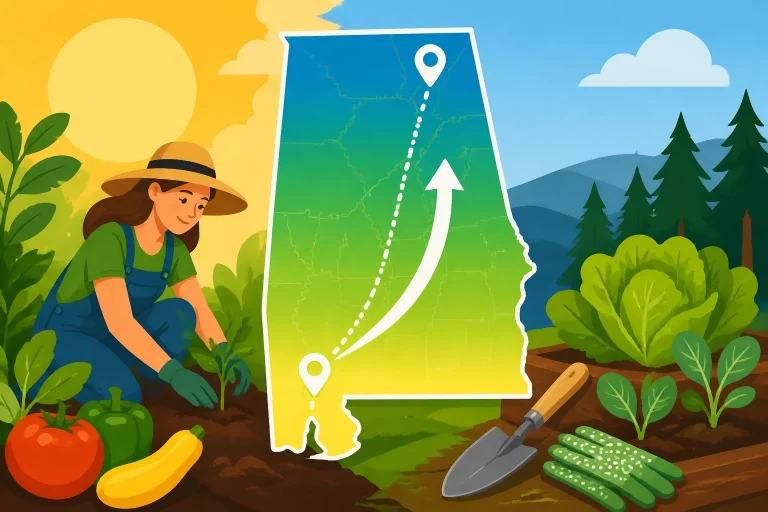
Alabama’s fall planting windows shift from the cooler northern areas to the warmer southern parts of the state. A schedule that fits one region can be early or late in another. Even within the same region, elevation, slope, wind exposure, shade and nearby buildings can alter the conditions in a particular garden.
North Alabama gardeners generally need to pay closer attention to the time available before cold weather. They may need to start long-season crops earlier and choose quick-maturing options for a late sowing. South Alabama’s longer warm season can leave more time for some fall crops, but heat can remain intense well into the period when gardeners want to sow cool-season seeds. The coast, inland locations and sheltered yards can differ, too.
Rather than treating a region’s suggested window as a guaranteed safe date, use it as a frame for decisions. Check the crop-specific dates for your area, then ask whether the actual bed is ready: Is the soil still hot and crusted? Can you keep the seedbed moist? Is a run of extreme heat forecast? Could a cold snap arrive before a slow crop matures? Alabama Planting Guide: Shifting Dates from South to North offers more detail on how the schedule changes across the state.
A garden notebook makes regional guidance more useful. Record the date, crop, variety, sowing method, emergence and harvest. Add a brief note about weather and where the bed sits. After a season or two, those observations can help explain why a crop did well in one location but struggled in another.
Match crops to the time and method you have
A fall garden can include several crop groups, but they do not all behave alike. Some are best direct-sown, some are easier to grow from transplants, and a few can be managed either way. The table below is a planning overview, not a date prescription. Use the regional crop calendar and packet directions to choose the actual sowing period.
| Crop group | Common fall choices | Usual starting approach | Main planning issue |
|---|---|---|---|
| Brassicas | Broccoli, cabbage, cauliflower | Often started as transplants; some gardeners sow seed for their own transplants | Long development time, plus heat and pest pressure while young |
| Leafy greens | Collards, kale, mustard, lettuce, spinach | Direct sowing or transplants, depending on crop and harvest goal | Germination and early growth can be difficult in hot soil |
| Roots | Beets, carrots, radishes, turnips | Usually direct-sown | Seed depth, steady moisture and a loose seedbed matter |
| Peas | English peas and other cool-season types | Direct sowing | Need enough time to establish before colder weather |
| Late warm-season crops | Beans, cucumbers, summer squash | Direct sowing or transplants, depending on crop | Need warmth to grow but must mature before the season closes |
| Alliums | Garlic and some onion-related crops | Planted or sown according to crop-specific guidance | These have their own seasonal schedules and are not interchangeable with quick greens |
Brassicas
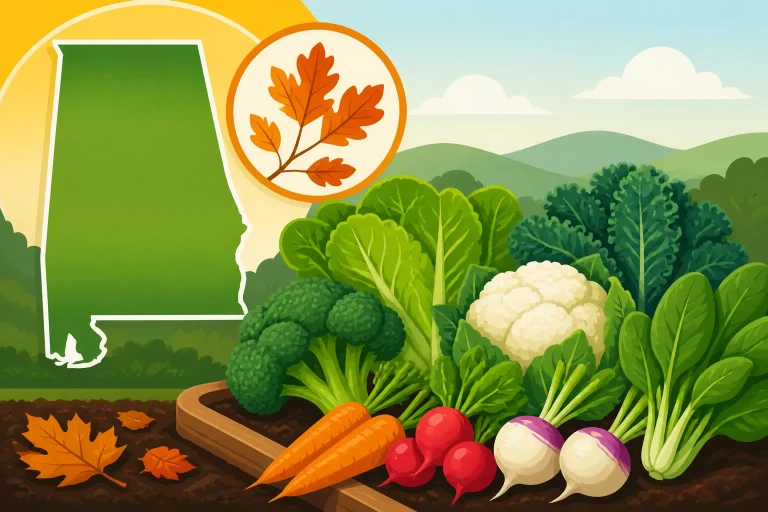
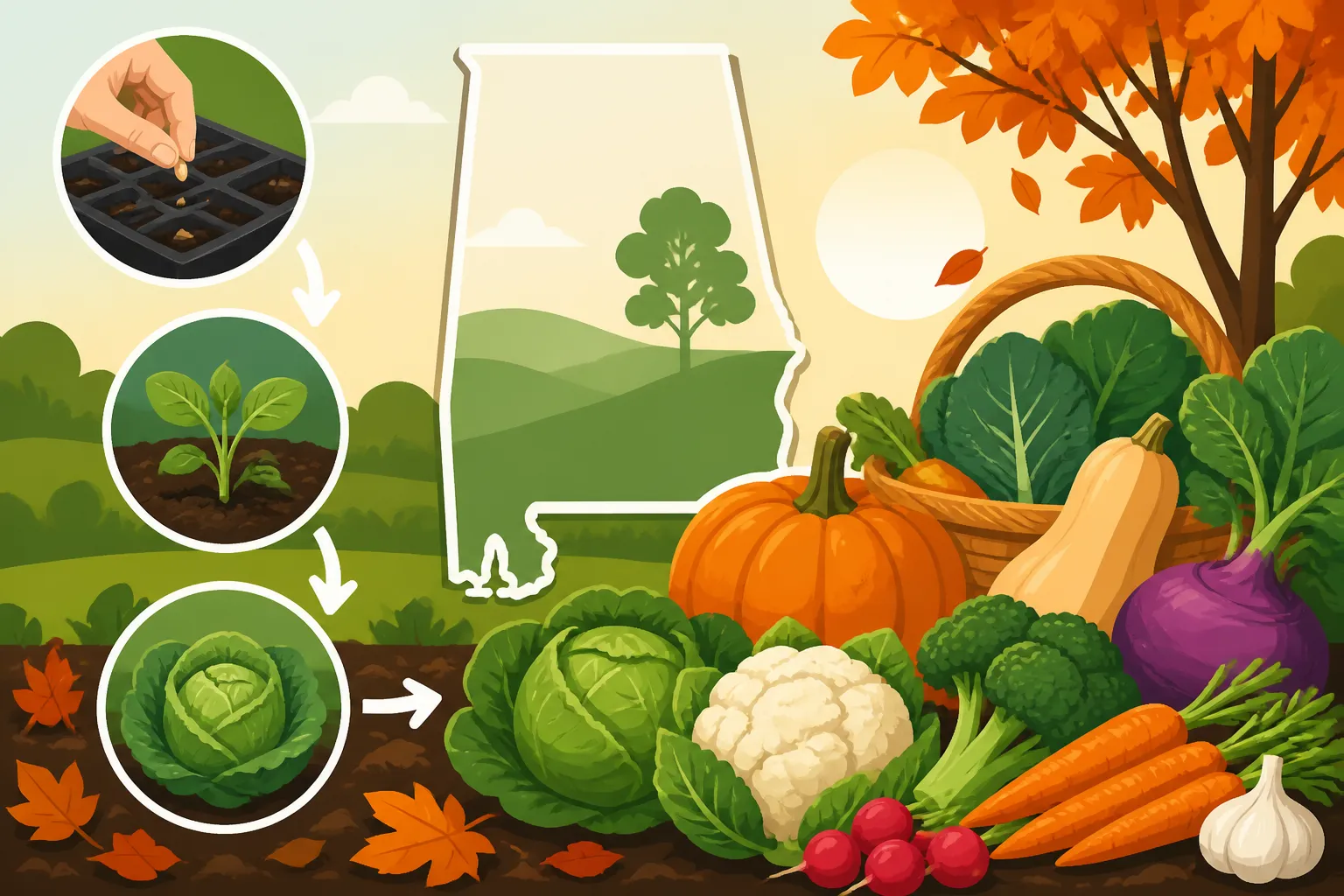
Broccoli, cabbage and cauliflower are common fall choices because they can provide a substantial harvest when established in time. They often benefit from transplanting: the gardener can raise seedlings in a protected place while the outdoor bed is still hot. A transplant also skips the vulnerable seed-germination stage in the final bed.
The trade-off is that transplants require planning and attention before they reach the garden. Seedlings kept too long in a small container can become stressed or root-bound. Seedlings exposed to harsh sun or irregular moisture can also be weak by planting time. If you raise your own, keep them growing steadily and acclimate them gradually to outdoor conditions before setting them out. If you buy starts, choose sturdy plants without obvious pest damage, wilting or crowded roots.
Brassicas can attract chewing insects as soon as they are planted. Check leaf undersides and growing tips regularly, and use barriers or pest-management practices that suit the garden. Crop-specific timing and choices are covered in When to Plant Broccoli, Cabbage, and Cauliflower Across Alabama.
Leafy greens
Collards, kale and mustard are useful for a sequence of harvests, and many gardeners can pick outer leaves while the plants continue growing. Lettuce and spinach are more sensitive to warm conditions, so their emergence and early growth often depend on choosing a suitable sowing window and keeping the seedbed consistently moist.
Direct sowing is convenient for crops that do not love root disturbance, but a hot surface can dry out before seedlings emerge. A lightly shaded seedbed or a temporary cover can moderate conditions while seeds germinate, as long as the cover does not trap excessive heat or prevent watering. Remove or adjust it once the seedlings are up and need light and airflow.
For crop-specific options and timing, see Planting Collards, Kale, and Mustard: Alabama Spring and Fall Dates and When to Sow Peas, Radishes, and Spinach for Alabama Harvests.
Roots
Beets, carrots, radishes and turnips are generally direct-sown. Their success depends on seed-to-soil contact, an even seedbed and moisture that does not swing from soaked to dry. Small seeds can be buried too deeply or washed into clumps by heavy watering. Thin seedlings as needed so roots have room to develop; leaving a dense row can produce plenty of foliage but undersized or misshapen roots.
Carrots are especially sensitive to a crusted surface during emergence. Prepare the top layer of soil carefully, avoid walking on it after sowing, and water gently enough to keep the seed area moist without moving the seeds. Radishes are quick, but that does not mean they are immune to poor conditions. Crowding, heat and inconsistent water can affect quality.
Peas and late warm-season crops
Peas belong in a fall plan where the local window gives them time to grow in favorable conditions. Check the crop-specific regional timing rather than assuming that all peas respond the same way. When to Sow Peas, Radishes, and Spinach for Alabama Harvests can help distinguish their schedule from that of the quicker root crops.
Beans, cucumbers and summer squash may also fit into the early part of a fall plan, depending on the region and remaining warm-season length. They need warmth for active growth, but a late sowing can run out of time before a harvest. Their place in the garden is different from that of greens and roots, which are intended to continue into cooler weather. For a late warm-season crop, compare maturity information with the remaining growing period rather than planting simply because space has opened up.
Direct-sow or transplant?
Direct sowing avoids transplant shock and can be efficient for roots, peas and many greens. Transplanting gives crops a head start and can be practical for brassicas, but it adds a nursery stage and a transition to outdoor conditions. If a crop is usually transplanted, that does not mean direct sowing is impossible; it means the gardener should check whether the local window and available care support it.
For more on choosing between the two methods, see Which Vegetables to Direct-Sow and Which to Transplant in Alabama. For detailed seed placement advice, Soil Depth and Spacing for Direct Sowing Vegetable Seeds is a useful companion.
Prepare summer beds before the sowing window
A fall crop often follows a summer crop, so the bed may be compacted, depleted, weedy or very dry just when new seeds need gentle conditions. Preparation before the planned sowing period saves time and reduces the temptation to plant into poor soil because the calendar says it is time.
Clear out finished plants and remove diseased material rather than leaving it in place. Healthy plant residues can be composted where appropriate, but avoid incorporating material that may carry pests or disease. Pull weeds before they set seed. If a summer crop is still productive, decide whether it is worth keeping: an old plant that shades or competes with new seedlings may cost more than the remaining harvest is worth.
Check soil moisture before working the bed. Soil that is too wet can compact when dug or walked on; very dry soil can be difficult to work and may form clods. If the bed is dry, wet it gradually and let moisture move into the root zone before preparing a fine seedbed. Raised beds can dry especially fast in Alabama heat, so they may need particular attention.
A practical bed-preparation sequence is:
- Remove spent crops, weeds and obvious debris.
- Check drainage and soil moisture. Correct standing-water problems before sowing.
- Loosen the surface where needed without pulverizing the soil.
- Add mature compost or other amendments only when they suit the bed and its soil condition.
- Rake the surface smooth for small seed, while leaving enough texture to reduce crusting.
- Water the bed before sowing if the soil is dry, then sow into evenly moist ground.
- Mark rows and crop names, especially when several batches are planted close together.
Avoid assuming that every bed needs the same amendment. Soil texture, drainage and nutrient history vary. If a bed has recurring poor growth or you are unsure what it needs, consult soil-testing guidance such as Guide to Testing Garden and Lawn Soil pH and Routine Nutrients. A soil test is more useful than adding materials by guesswork.
For a bed that has been baking through midsummer, weed control and soil preparation can be done before the sowing date arrives. Prepping Midsummer Alabama Beds for Fall Crops Under July Sun covers that transition in more detail. Mulch can protect soil and slow weed growth, but keep it from smothering new seedlings or blocking the light they need. Once seedlings are established, Mulching Alabama Vegetable Gardens to Block Weeds and Cool Soil can help with decisions about bed coverage.
Plan the bed layout
Do not plant every crop in one large block just because the bed is available. Group crops with similar water and light needs, and leave walking access so you can weed, thin and harvest without stepping on the soil. Taller crops can shade short rows; that may be helpful for tender seedlings during establishment but can become a problem if it reduces light later.
Keep crop-family rotation in mind. A bed that held cabbage-family crops recently may be a poor choice for another round of closely related crops if disease or pest issues were present. Rotation is not a guarantee against problems, but changing crop families can help avoid repeatedly placing the same host plants in the same spot. If space is limited, use containers or separate sections rather than forcing every crop into the same narrow row.
Sow and establish crops through late-summer heat
The most challenging part of fall gardening in Alabama may be getting seeds and small transplants through hot weather. A seed can fail before it has a chance to grow if the surface dries out, overheats or crusts over. A transplant can wilt quickly when its roots are not yet established. Paying attention during the first weeks matters more than trying to compensate later with frequent heavy watering.
Keep the seed zone evenly moist
Seeds need reliable moisture to germinate. Water gently and check the soil surface often, especially during dry, windy weather. The goal is not to keep the bed waterlogged; overly wet soil can reduce airflow and encourage problems. Instead, keep the seed zone from repeatedly drying out while roots and shoots are forming.
A fine spray or gentle watering can is less likely to move seeds than a strong jet. For rows of small seed, a temporary light cover can reduce evaporation, but it must be checked often. Remove or lift it as soon as seedlings emerge if it limits light or traps heat. Do not assume a seedbed is still moist just because the surface looks dark after watering; check below the very top layer.
New transplants need special care until roots move into the surrounding soil. Water the root area thoroughly at planting, then monitor moisture closely. A plant that wilts briefly in intense sun may recover, but repeated severe wilting can delay establishment. How Often to Water Emerging Garden Seedlings in Alabama Heat offers more detail on matching watering to seedling conditions.
Use shade with care
Temporary shade can reduce the stress of direct afternoon sun during germination and early establishment. It is most useful when it cools the seedbed without keeping seedlings dark, damp or stagnant. Morning sun and good air movement remain helpful. Avoid leaving a cover in place automatically; observe the plants and the weather, and adjust as conditions change.
Shade is not a substitute for choosing an appropriate sowing period. If the soil is too hot for reliable germination or an extended heat spell is expected, waiting for a more suitable stretch may be better than trying to force a crop into a difficult window. The trade-off is that waiting shortens the time left for maturity. That is why crop choice and timing have to be considered together.
Thin seedlings and manage competition
Once seedlings have emerged, thin them according to crop needs rather than letting them compete in a crowded line. Crowded plants compete for light, water and root space; they are also harder to inspect and keep clean. For small-seeded crops, thinning can feel wasteful, but a well-spaced stand is more likely to develop evenly.
Weed early, before weeds become large enough to steal moisture or shade young plants. When pulling weeds near seedlings, loosen the soil carefully so you do not disturb crop roots. If a bed dries quickly, a thin mulch between established rows can reduce evaporation and suppress new weeds. Keep mulch away from tiny seedlings and avoid covering the row before the crop can push through.
Watch for pests while plants are small
Tender seedlings are easy targets for chewing insects, caterpillars and other garden pests. Check plants frequently, including leaf undersides and the center of new growth. Look for fresh holes, droppings, eggs or clipped stems rather than waiting for a row to look badly damaged. Physical barriers may help protect young plants, but they need to be installed without trapping excessive heat and should be checked so plants have room to grow.
If you use a pesticide, follow the product label, which is the legal instruction for use. Do not apply a product to a crop or pest unless the label permits that use, and do not exceed label directions. When a plant problem is unclear, identify the cause before taking action; insect damage, disease and heat stress can look similar at first.
Protect the harvest as temperatures cool
The phrase “before frost” can be misleading if it encourages gardeners to plan around one fixed date. Frost dates describe probabilities, and weather varies from year to year. A sheltered yard can differ from an exposed garden nearby, while low spots may collect colder air. Use local station information as a guide, then watch the forecast and the condition of your plants.
Different crops also respond differently to cold. Some cool-season vegetables can continue through cool weather, while tender crops may be damaged sooner. A light frost is not the same as a prolonged freeze or a hard freeze. The best response depends on the crop, its stage, the forecast and the protection available. How Light Frost Advisories Differ From Hard Ground Freezes explains why those conditions should not be treated as interchangeable.
Prepare protection before it is needed
Do not wait until a freeze warning to decide what you will use. Row cover, hoops, stakes or suitable containers can be assembled in advance. The cover should protect plants without crushing them, and it needs to be secured so it does not blow away. Check that the material is suitable for the expected conditions and the crop’s size.
Covering can reduce exposure, but it cannot guarantee protection in every cold event. A cover that touches leaves may provide less protection than one supported above the plants, and gaps can let cold air reach the crop. Remove or ventilate covers when conditions warm so plants do not overheat. For practical options, see Protecting Fall Crops From the First Alabama Freeze and Covering Tender Garden Plants During an Alabama Frost Advisory.
Watering is not a universal freeze solution. Soil moisture, wind, cloud cover and the kind of freeze all affect outcomes. Avoid improvising overhead irrigation during a freeze unless a reliable, crop-appropriate recommendation supports that method; poorly managed water can create additional damage. When a forecast is uncertain, prioritize crops that are most vulnerable and the plants with the harvest you most want to preserve.
Harvest selectively
A garden does not need to be harvested all at once at the first hint of cold weather. Pick mature produce before damaging conditions, and assess the remaining plants afterward. Some greens can recover from mild cold, while tender crops may not. If a hard freeze is forecast and a crop is ready to eat, harvesting early is often the simplest way to avoid losing it.
For crops that continue producing, take only what is ready and leave healthy growth in place if conditions remain suitable. Harvesting regularly can encourage use of the bed and help you catch pest or disease issues early. Do not assume that a crop’s appearance alone tells you whether it can tolerate the forecast; consider the type of cold event and use crop-specific guidance.
Adjust the plan when sowing runs late
A missed sowing window does not mean the garden is finished, but it does change the choices. The later the start, the less room there is for a crop that takes a long time to mature. Choose a faster crop, select a variety with a shorter maturity estimate where available, use transplants for crops suited to transplanting, or accept a smaller harvest rather than expecting a full-size crop.
A few practical options can keep a late-season bed productive:
- Favor quick crops. Radishes and some leafy greens can provide harvests sooner than slow-developing crops, provided temperatures and moisture suit them.
- Harvest young. Some greens can be eaten as baby leaves before they reach full size. This changes the goal from a mature plant to an earlier, smaller harvest.
- Use transplants strategically. A sturdy transplant can save the early seedling stage, but it still needs enough time to establish and grow.
- Make a succession sowing. Instead of sowing a large amount at once, plant a smaller batch and repeat when conditions make sense. This spreads harvest and gives you a chance to adjust after seeing the first batch.
- Protect the most valuable plants. If the season is ending, use available covers on a compact group of crops rather than trying to protect an entire garden poorly.
A late sowing can also fail because the weather turns favorable only briefly. Avoid overcommitting seed or bed space to a crop that has little chance to mature. It may be better to use the space for a quick greens harvest or prepare it for a later planting plan. For late-season greens, Sowing Late Greens and Radishes Before November Freezes Arrive can help frame the decision, while Calculating Fall Sowing Dates from First Killing Frost explains the backward-counting approach.
Diagnose problems before changing the schedule
If a crop is not emerging, first check seed depth, soil moisture and crusting. If seedlings emerge and then collapse, inspect for physical damage, disease symptoms, pests and water stress. If plants survive but grow slowly, consider crowding, poor light, nutrient issues, root disturbance or temperatures outside the crop’s preferred range. Adding fertilizer without identifying the cause may not solve the problem and can make matters worse.
Keep a short record of failed sowings as well as successful ones. Note whether the seedbed was shaded, how often you checked moisture and whether a heat spell or heavy rain occurred. A second sowing can be adjusted based on those observations. For example, a more sheltered seedbed, gentler watering or a different crop may be a more useful change than simply repeating the same sowing on a different day.
Make harvest the measure of success
A fall garden does not have to look like a full spring garden to be worthwhile. A steady supply of greens, a few rows of roots and a small harvest of brassicas can be a successful season. Match the scale of the planting to how much time you have to water, thin, weed and protect it. A manageable garden with crops that mature is more useful than a large bed sown all at once without enough care to establish it.
The best plan is one that can change with conditions. Use local planting guidance to set the broad window, then adjust for soil temperature, heat, rainfall, plant stage and forecast. If one crop misses its window, choose another rather than treating the calendar as a promise.
Frequently Asked Questions
When should I start planning an Alabama fall vegetable garden?
Start planning before the bed is ready to sow. Choose crops, check maturity information, review regional planting guidance and estimate the harvest period you want. Preparing the bed ahead of time gives you more flexibility when the right conditions arrive.
Is a first frost date a guaranteed deadline?
No. Frost dates are probabilities based on weather records, not fixed predictions for a particular year or garden. Use them to plan, then follow local forecasts and consider how your site differs from the weather station.
Should I direct-sow or transplant fall vegetables?
It depends on the crop and the time available. Roots and many quick greens are commonly direct-sown; brassicas are often grown as transplants to get a head start. Check crop-specific guidance and account for the maturity estimate’s starting point.
Can I sow cool-season crops while Alabama weather is still hot?
Sometimes, but hot soil and dry surface conditions can make germination and establishment difficult. Choose a suitable crop and window, keep the seed zone evenly moist and consider temporary shade. If conditions are too extreme, waiting for a better stretch may be more effective.
What should I do if I miss the recommended window?
Choose a faster crop or a smaller harvest goal, consider suitable transplants, and compare maturity estimates with the time remaining before colder weather. Avoid planting a slow crop simply because the bed is empty.
Disclaimer
This article is for general informational purposes only and does not constitute professional advice. Laws, prices and regulations vary by location and change over time. Consult a qualified professional for guidance on your specific situation. Alabama Gardening Guide is not a government agency and is not affiliated with any university extension, state department of agriculture or other government agency.