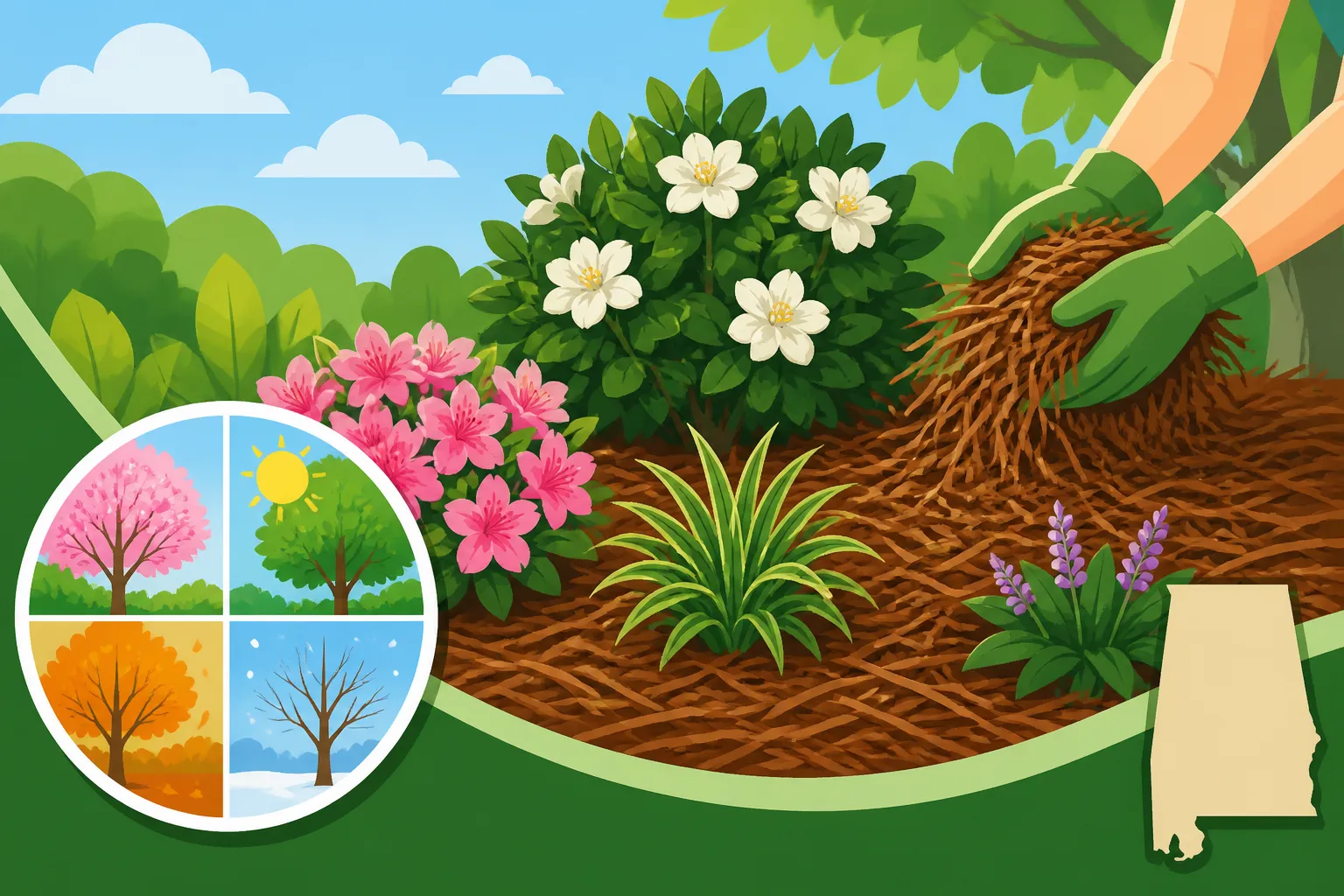
Pine Straw Mulch for Alabama Beds: When to Spread It
Pine straw is a familiar mulch for Alabama landscapes, but spreading it at the wrong time or piling it too close to plants can cause trouble. The best timing depends on what the bed needs: weed suppression, moisture conservation, or protection from temperature swings. Here’s how to choose a useful window, prepare the bed, and apply pine straw without smothering plants or inviting mulch to drift.
What Pine Straw Mulch Does in Alabama Beds
Pine straw is made from fallen pine needles, sometimes called pine straw or pine needles. As a bed covering, it helps reduce moisture loss from the soil surface, limits some weed growth, and softens the look of landscape beds. It also breaks down gradually, adding organic material to the soil over time.
Its main benefit is the layer it creates between bare soil and the weather. That layer can slow evaporation during hot, dry spells and help reduce the splash of soil onto lower leaves during rain. It does not eliminate weeds, stop every weed seed from germinating, or replace watering when soil is dry. Think of it as one part of bed care, not a complete fix.
Pine straw is lightweight and easy to arrange around established shrubs, perennials, and trees. That same lightness is a trade-off: wind, heavy rain, sloping ground, and foot traffic can move it. A neat-looking bed may need occasional fluffing or touch-ups, especially after storms.
| Bed situation | Why pine straw can help | Main point to watch |
|---|---|---|
| Established shrubs and trees | Covers bare soil and helps conserve moisture | Keep it away from trunks and stems |
| Perennial beds | Creates a loose cover that can be adjusted around plants | Leave crowns and new growth uncovered |
| Vegetable beds | Helps limit soil splash and surface drying | Keep it clear of seedlings and avoid burying plant bases |
| Slopes or exposed edges | Provides a lightweight surface cover | Use edging or another strategy to reduce movement |
| Beds beside buildings | Gives a tidy finish and covers soil | Keep dry material away from structures and check local fire guidance |
Pine straw may suit a bed where a loose, natural-looking cover is welcome. It may be less convenient where wind constantly scatters it, where the bed receives heavy runoff, or where plants need open soil for reseeding. For a broader comparison of bed-cover choices, see How to Select the Right Mulch for Alabama Flower and Shrub Borders.
Pine needles are often described as strongly acidifying. As they break down, they can have some effect on the soil surface, but a layer of pine straw should not be treated as a reliable way to change the soil pH of an established bed. If soil acidity matters for a particular crop, base amendments on a soil test rather than on the mulch material. The article Guide to Testing Garden and Lawn Soil pH and Routine Nutrients explains why testing is more dependable than guessing.
When to Spread Pine Straw
The best time to spread pine straw is when the bed is ready for it: plants are established, the soil is not waterlogged, and the surface is moist enough that the covering can help conserve moisture. In Alabama, that may mean a spring application, a refresh after summer heat, or a fall application before the cooler season. No single calendar date works for every bed or every part of the state.
Spring
Spring is a practical time to cover beds after new plants are in place and the soil has begun warming. Mulch can help hold moisture as the growing season advances and reduce the amount of bare soil available for weeds. Wait until seedlings or newly planted flowers are easy to see, and keep the straw pulled back from their crowns and stems.
Avoid blanketing soil before you have finished planting, weeding, or checking irrigation. A fresh layer can hide small plants, make it harder to work around them, and cover weeds that should first be removed. If a bed contains plants that reseed themselves, leave the intended seed-starting patches open until seedlings have emerged.
Spring is also a useful time to inspect how much old mulch remains. If last season’s straw is still covering the ground adequately, there may be no reason to add more. Raking or fluffing the existing layer can restore an even appearance without making the cover excessively thick.
Summer
Pine straw can help conserve soil moisture through Alabama’s hot season, but it is not a substitute for checking the soil. Apply or refresh it when the bed is becoming bare or the existing layer has thinned, not simply because a particular month has arrived. A thick, newly applied layer over already dry ground will not supply water to the roots.
Water the bed if the root zone is dry, then apply straw once the soil surface is no longer saturated. Mulch can make it harder to see how wet the soil is, so check beneath the covering rather than relying on its appearance. The advice in Checking Alabama Soil Moisture After Rain Before Running Water can help you decide whether a bed needs water before or after mulching.
If extreme heat has stressed plants, address their water needs and condition first. Pine straw can reduce direct sun on the soil, but it cannot reverse wilting caused by dry root zones or repair heat injury. For summer flower-bed care, see Watering and Protecting Landscape Flowers in Alabama Summer Heat.
Fall
Fall is a useful time to cover exposed soil around established landscape plants and prepare beds for cooler weather. It is also a convenient opportunity to remove weeds and tidy bed edges before spreading the straw. In Alabama, fall conditions vary by region and year, so let soil moisture, plant condition, and the amount of existing cover guide the decision rather than a fixed date.
Pine straw can be spread around trees and shrubs after planting, but it should not be used to bury the root flare or pile against the trunk. For timing new woody plants, Planting Trees and Shrubs in October: Alabama Fall Rooting Season covers the planting window and establishment considerations.
Winter
A winter application may be useful if a bed is bare, soil is exposed, or an existing mulch layer has washed away. In many established landscape beds, however, the straw already in place can remain through winter. Check for areas where wind or runoff has thinned the cover rather than automatically adding a fresh layer everywhere.
Pine straw is dry, combustible material. In beds near a house, deck, outdoor equipment, or other structures, consider the potential fire hazard and follow current local guidance. Do not assume that a particular mulch material is safe at every distance from a building; check local rules and official notices for requirements that apply where you live.
Use plant growth, not just the calendar
A timing decision should account for what is happening in the bed. Freshly emerging plants, direct-sown seeds, and groundcover spreading across the soil may need open space. Established shrubs and perennials can usually be mulched more easily, provided their stems and crowns remain clear.
Before spreading, ask:
- Is the soil dry, moist, or waterlogged?
- Are there small plants or seeds that could be covered?
- Is the current mulch still doing its job?
- Will wind or runoff carry loose straw out of the bed?
- Is the bed close enough to a structure that local fire guidance matters?
Those checks are more useful than treating pine straw as a task that must be done on a set seasonal date.
How to Prepare and Apply Pine Straw
Good results depend more on preparation and placement than on spreading a large quantity. Start with a bed that is accessible and free of weeds you do not want hidden beneath the new layer.
Prepare the bed first
Pull or cut visible weeds before applying straw. Remove debris that could interfere with an even cover, and check for irrigation lines, low-growing plants, and newly planted seedlings. If the soil is dry, water as needed before mulching. If it is saturated after rain, wait until excess water has drained so you are not working wet soil or trapping a soggy surface under the mulch.
If the bed needs compost or another soil amendment, apply it before the pine straw. Mulch is a surface covering, not a substitute for soil preparation. Work amendments into the soil only when appropriate for the plants and bed, then cover the surface. For details on combining organic matter and mulch, see Layering Compost and Protective Mulch Over Garden Soil.
Spread a loose, even layer
Fluff pine straw as you spread it so the needles are distributed rather than compressed into a dense mat. A loose layer lets water pass through and makes it easier to move the covering aside for planting or weeding. Avoid building a thick mound just to make the bed look fuller. Excessive mulch can block light from small plants, hold moisture where stems meet the soil, and make future maintenance harder.
The right amount depends on the starting condition. A bare bed needs more coverage than one with an intact layer from the previous season. Use the ground itself as your guide: aim for an even cover that shades most of the soil without burying plants or creating a deep, compacted blanket. If the old layer is patchy, fill thin spots instead of piling additional material everywhere.
Keep crowns, stems, and trunks clear
Do not pile pine straw against plant bases. Leave an open space around the crowns of perennials and the stems of annuals so air can circulate and water does not stay trapped at the soil line. Around trees and shrubs, keep the trunk visible at the base and avoid covering the root flare. A mulch “volcano” against a trunk is not helpful, even if it looks tidy at first.
When mulching around new plants, pull the straw back far enough to expose the point where the stems meet the soil. Check again after rain or wind, because lightweight straw can shift and settle against plant bases.
Work carefully around seeds and small plants
Direct-sown seeds need access to light and space to emerge. Do not cover freshly sown rows with a layer of pine straw unless the seed packet or a trusted local recommendation specifically calls for a protective covering. If seedlings are already growing, spread straw around them by hand and leave room for leaves and new growth.
For tiny transplants, apply mulch in a ring around the plant rather than over it. Keep checking as the plant grows; a plant that was clear when mulched may become crowded as the straw settles or drifts.
Shape the bed so straw stays in place
Use the bed edge to keep pine straw from migrating into lawns, sidewalks, and drains. On slopes, arrange the straw so it follows the bed’s contours and avoid spreading it where runoff can carry it downhill. Some sites may need an edging solution, a more stable mulch, or changes to water flow rather than repeated replacement of washed-away straw.
If mulch regularly escapes onto paving, use the practical suggestions in Preventing Bed Mulch from Washing onto Paved Walkways. The goal is to keep the material in the bed without creating a barrier that traps water or blocks needed drainage.
Choosing the Right Approach for Different Beds
Pine straw can work in many Alabama landscape beds, but plants and growing habits change how it should be applied. A layer that suits an established shrub bed may be a nuisance in a seed-starting area.
Shrub and tree beds
Shrubs and trees benefit most when the soil beneath their canopies is covered evenly and the mulch stays away from trunks. Keep the root flare visible, especially on newly planted trees. Do not use pine straw to raise the soil level against the trunk or conceal a planting-depth problem.
As trees and shrubs establish, check the soil under the mulch before watering. The surface may look dry while the soil beneath remains moist, or it may be dry below even when the straw looks fresh. Newly planted woody plants still need attention to water and establishment; mulch alone does not ensure healthy roots.
Perennial beds
In perennial borders, work around each plant’s crown. Leave some space for low-growing plants to spread and for self-sown seedlings to emerge. If a perennial dies back seasonally, do not assume that a bare-looking spot is empty; check for dormant crowns before covering it deeply.
Pine straw can be raked aside when dividing plants or adding new ones, then returned in a loose layer. Avoid scattering straw directly over newly divided crowns. For additional planning on perennial placement and timing, see Planting Perennial Beds Across Central Alabama Landscapes.
Vegetable beds
Pine straw can serve as a surface mulch around established vegetables, especially where reducing soil splash or surface drying is useful. Keep it away from seedlings, stems, and areas where seeds still need to emerge. It may be easier to use a thinner, more carefully placed covering in a vegetable bed than in a shrub border, because planting and harvesting require frequent access to the soil.
Do not mix pine straw into the vegetable-bed soil as though it were finished compost. Leave it on the surface to break down gradually. If you want crop-specific advice on using mulch, Mulching Alabama Vegetable Gardens to Block Weeds and Cool Soil focuses on vegetable beds, while Spreading Summer Mulch Around Vegetable Plants to Protect Roots addresses hot-weather use.
Beds with groundcovers or self-seeding flowers
Groundcovers need room to spread across the soil, and self-seeding flowers need open spots for seeds to reach soil and germinate. In these beds, mulch selectively. Keep the existing plants visible, clear small gaps around new growth, and leave chosen reseeding areas uncovered.
A fully mulched bed may look finished, but it can work against the natural spread of plants meant to fill the space. If plants are intended to knit together into a living cover, gradually reduce mulch in the areas where they are expanding.
Beds near foundations and outdoor living areas
Pine straw is light, and dry needles can be moved by wind or carried by water. Keep the bed tidy, watch for material that drifts toward buildings, and avoid letting it accumulate against siding, decks, or other structures. Dry plant material can burn, so consider the site and check local fire guidance before placing it near structures.
Where a narrow foundation bed is exposed to wind or sits beside paving, pine straw may need frequent maintenance. A heavier mulch may stay in place better, but any material should be kept clear of plant stems and used in a way that does not create drainage problems.
Refreshing, Maintaining, and Troubleshooting the Layer
Pine straw should be maintained according to its condition, not replaced on an automatic schedule. It gradually settles and decomposes, and its appearance changes with weather and foot traffic. A bed may need a touch-up in one spot and no new material elsewhere.
Check before adding more
Part the straw in several places and look at the soil. If most of the bed is still covered and water can reach the soil, a full refresh may be unnecessary. If bare patches have opened, add material only where it is needed. If the existing layer is tangled or compressed, fluff it gently before deciding whether to add more.
Avoid solving every bare patch by piling on a new layer across the entire bed. Repeated additions can build up around plants and make it difficult to see crowns, trunks, or emerging growth.
Recheck after heavy rain or wind
Rain can flatten or move pine straw, while wind may scatter it beyond the bed. After a storm, pull material back from plant bases and walkways, replace coverage in thin spots, and check whether runoff is washing through the bed. If the same area loses mulch repeatedly, the underlying problem may be slope, drainage, or water flow rather than too little straw.
A bed with active runoff may need a different surface treatment or a change in how water moves across the yard. Simply applying more loose material can lead to more cleanup and does not address erosion.
Watch for too much moisture at plant bases
Mulch helps conserve moisture, but too much material crowded against stems can keep the plant base damp and reduce airflow. If a plant looks unhealthy, do not assume the mulch is the cause, but inspect the soil and stem area. Pull the straw back if it is piled against the crown or trunk, and check whether the soil is staying wet.
Plants with poor drainage problems need a site or soil solution, not just a different mulch layer. For vegetable beds where standing water is an issue, Improving Drainage in a Soggy Alabama Garden Bed covers ways to address the underlying condition.
Keep the layer clear of weeds and debris
Pine straw can reduce weed pressure, but weeds can still root in material that collects on top or in the soil beneath it. Remove weeds while they are small, before they become established or set seed. Check bed edges and gaps around plant bases, where weeds often find open soil.
As the straw breaks down, leaves and other organic debris may collect in it. Remove debris if it is matted or interfering with plant growth, but do not disturb roots unnecessarily. If the bed has become difficult to manage, clear a small area at a time, re-establish the plant layout, and apply a fresh, moderate cover.
Common Pine Straw Mulching Mistakes
A few recurring mistakes account for most problems with pine straw. They are easy to avoid once the purpose of the mulch is clear.
- Spreading before removing weeds: Mulch can hide weeds temporarily, but established weeds may continue growing through it. Weed first, then cover the soil.
- Covering small seedlings: Emerging plants need room to grow. Keep straw off seed rows and young foliage.
- Piling it against stems or trunks: Crowns, stems, and root flares should remain visible and clear.
- Adding a new layer without checking the old one: Existing straw may still cover the soil. Refresh thin areas instead of adding material everywhere.
- Treating mulch as a watering replacement: Check soil moisture beneath the straw and water when the root zone needs it.
- Assuming needles will fix soil pH: Use a soil test to guide pH decisions rather than relying on pine straw.
- Ignoring movement on slopes: If rain carries the material away, address runoff or consider a more stable covering.
- Using mulch to conceal a planting problem: Straw should not be used to hide buried crowns, trunks, or a poorly drained site.
- Forgetting fire considerations: Dry plant material near structures deserves attention. Check current local guidance and keep the area maintained.
Frequently Asked Questions
Should pine straw be spread before or after planting?
Usually, plant first and mulch afterward. This makes it easier to position plants correctly and keeps straw from covering seed rows or small transplants. If the bed is already mulched, pull the material back, plant, water as needed, and return a loose layer while keeping it clear of the plant base.
Can pine straw make Alabama soil too acidic?
A surface layer of pine straw is not a dependable way to change the pH of an established bed. If a plant needs a particular soil pH, test the soil and use the results to guide any amendment. Do not rely on pine needles to correct a soil problem.
How often should pine straw be replaced?
There is no single replacement interval for every bed. Check whether the soil is still covered, whether the material has moved, and whether it is piled too deeply around plants. Add straw where coverage has thinned; leave intact areas alone.
Is pine straw suitable for vegetable gardens?
It can be used around established vegetable plants when kept away from seedlings and stems. Leave seed rows open until plants emerge, and apply it as a surface layer rather than mixing it into the soil. Crop timing and bed conditions matter, so follow crop-specific guidance when planning a vegetable garden.
Disclaimer
This article is for general informational purposes only and does not constitute professional advice. Laws, prices and regulations vary by location and change over time. Consult a qualified professional for guidance on your specific situation. Alabama Gardening Guide is not a government agency and is not affiliated with any university extension, state department of agriculture or other government agency.