Alabama Planting Guide: Shifting Dates from South to North
Planting dates that work near the coast can be too early for a garden farther north, while a schedule built for the Tennessee Valley may waste growing time in southern Alabama. The useful approach is to shift planting by region, crop and current conditions—not follow one statewide calendar. Here’s how to plan those shifts, use local weather clues and choose the right next step for your garden.
Why planting dates change across Alabama
Alabama’s growing conditions vary from the warm southern coast and Wiregrass to the hills and valleys of the north. That distance affects when soil warms in spring, how long summer heat lasts, and when cold weather is likely to interrupt a fall crop. Elevation, shade, slope, soil drainage and proximity to water can also affect a particular yard.
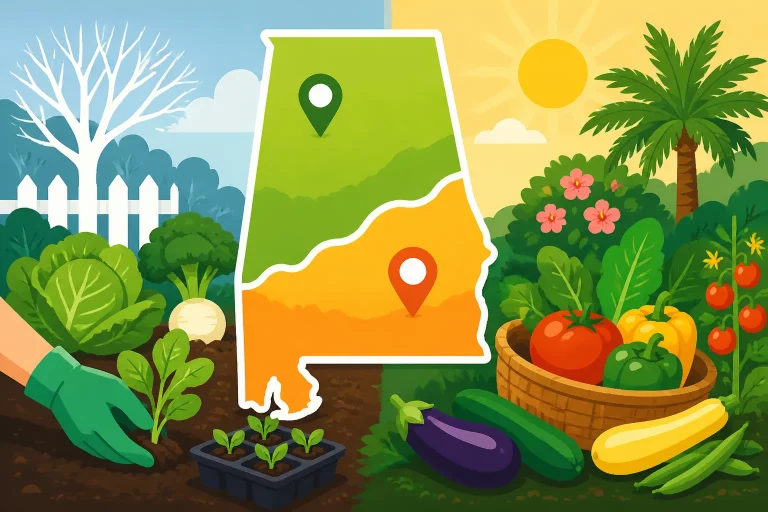
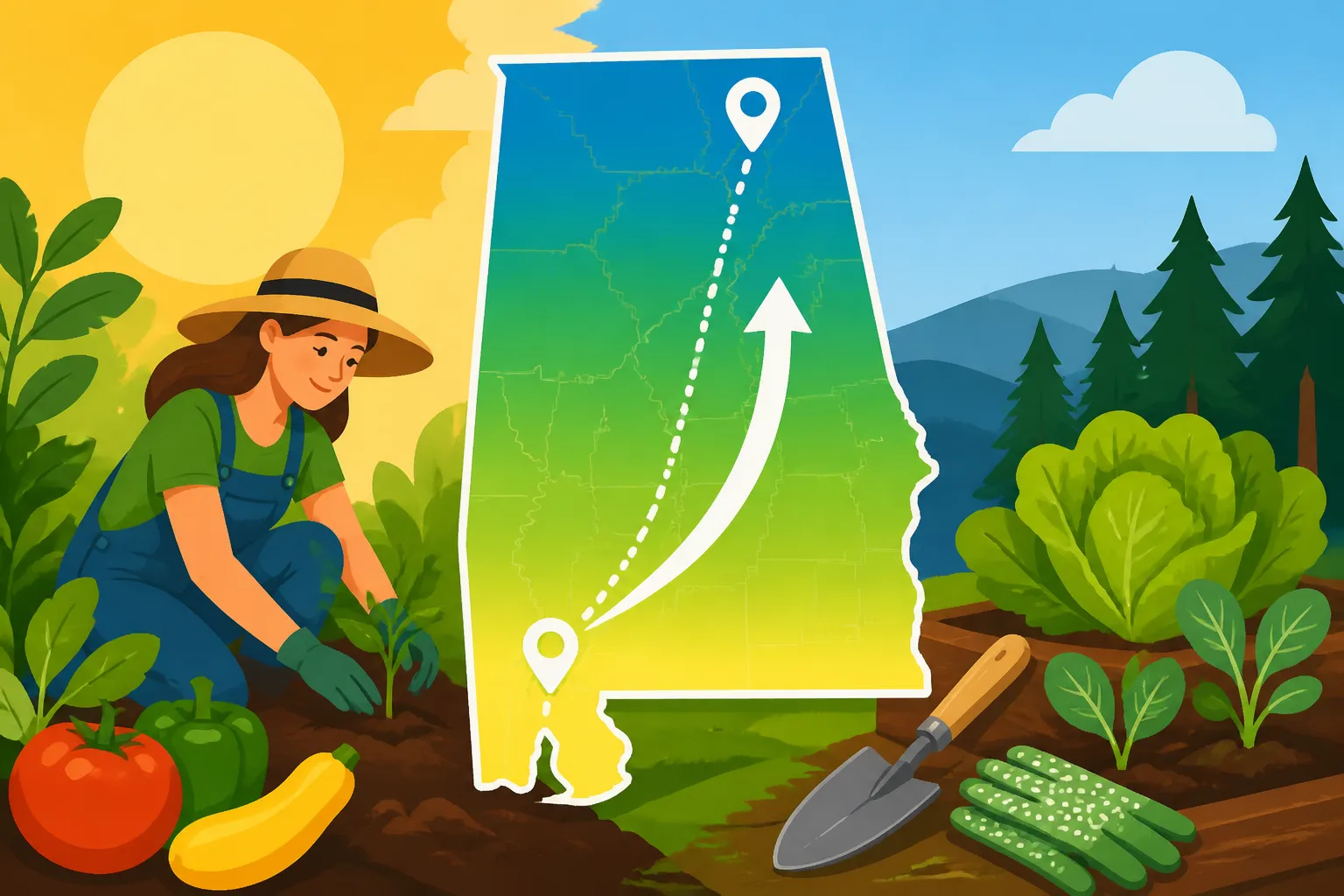
The broad pattern is straightforward: warm-season planting can generally begin earlier in southern areas, while cool-season crops may have more time to grow during the milder fall and winter there. In northern areas, spring warmth tends to arrive later, and fall cold tends to become a more immediate planning concern. These are regional tendencies, not guaranteed dates for every garden.
A statewide planting chart can still be useful, but treat it as a starting point. If it gives a single date for a crop, that date cannot account for every local condition. A garden in a low, exposed spot may face a different risk from a protected bed near a building. A heavy, wet soil may warm more slowly than a well-drained bed, even in the same town.
It also helps to distinguish a planting date from a prediction. A date on a calendar is a planning aid; it does not guarantee that frost, heat or a prolonged wet spell will not arrive. Frost dates are estimates based on historical conditions, and they vary from year to year. Pair regional guidance with the weather forecast and the actual condition of your soil.
For a broad view of how the state’s schedule changes, see How Planting Dates Change Across Alabama’s Regions. To plan a whole season rather than one crop at a time, use Alabama Vegetable Planting Guide: Dates for North and South Zones alongside crop-specific guidance.
The practical north-to-south shift
It’s tempting to treat Alabama as a simple line from “plant early in the south” to “plant later in the north.” That is a helpful first approximation, but it leaves out an important detail: different crops respond to different kinds of weather. A warm-season vegetable may need warm soil and settled conditions, while a cool-season crop may struggle once temperatures become too high.
A useful comparison is the crop’s main constraint:
| Crop group | Main timing concern | What to adjust from south to north |
|---|---|---|
| Tender warm-season crops | Cold soil and late cold snaps | Delay planting until local conditions are suitable; the wait may be longer farther north |
| Heat-loving crops | Soil warmth and sustained warmth | Check soil conditions rather than planting by a statewide date |
| Cool-season greens | Heat, which can reduce quality or lead to bolting | Start within the local cool-weather window; spring opportunities may close sooner as heat arrives |
| Fall brassicas and root crops | Time to mature before cold limits growth | Work backward from a local cold-weather window and the crop’s days to maturity |
| Garlic and other overwintering crops | Establishing roots before winter | Follow regional guidance; the preferred planting window can shift across the state |
| Perennials and shrubs | Establishment conditions and plant type | Use locally appropriate guidance and give new plants time to settle in |
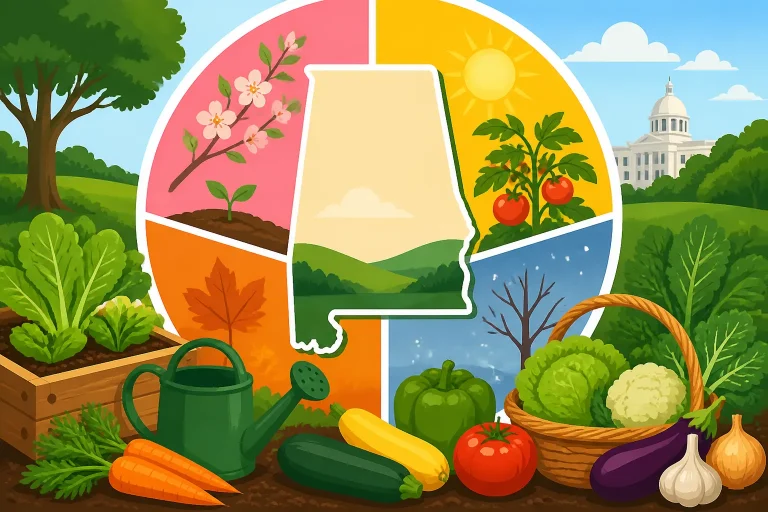
Spring: wait for conditions, not a warm afternoon
In spring, a run of sunny days can make a garden feel ready before the soil is. A brief warm spell is not the same as reliably warm conditions. Tender crops, including tomatoes, peppers, eggplant, cucumbers and melons, need more than a pleasant afternoon to establish well. Cold soil can slow growth, and a return of chilly weather can set plants back.
The southern part of the state often reaches suitable conditions earlier than the north, but that does not mean every warm-season crop should go out at the first sign of warmth. Check the crop’s needs, the soil, the forecast and the local planting guidance. A sheltered container or raised bed may warm differently from an exposed in-ground plot, but it still needs to be assessed on its own conditions.
Cool-season crops follow a different rhythm. They are often planted while the weather is still mild, not after the garden has become reliably hot. In the south, spring heat can arrive early enough to shorten the time available for crops such as lettuce and spinach. Northern gardeners may have a later start to spring but a different length of cool growing weather. The key is not simply to plant earlier or later; it is to avoid pushing a crop beyond the conditions it tolerates.
For tender transplants, compare general timing with Safe Planting Dates for Tender Transplants After Spring Freezes. If you’re starting warm-season seedlings indoors, Spring Seed-Starting Schedule for Alabama Gardeners can help coordinate indoor growth with outdoor readiness. A crop-specific schedule is also useful: for example, When to Plant Broccoli, Cabbage, and Cauliflower Across Alabama covers crops whose preferred growing conditions differ from those of summer vegetables.
Summer: heat can matter more than the calendar
A later planting date is not always safer. Waiting too long to plant a warm-season crop may leave it facing intense heat while it is small, or reduce the time available for it to mature. At the same time, sowing a tender crop into cool soil can lead to a slow, uneven start. Match the crop to the soil and season instead of assuming that one planting period suits all of Alabama.
Regional differences can be especially visible in midsummer. In the north, a crop may have a somewhat different seasonal runway than it does farther south. Along the coast and in the southern part of the state, warmth may persist longer, but heat and dry soil can still stress seedlings and transplants. Longer warmth does not guarantee easier growing conditions.
When planning a summer sowing, ask whether the crop will have the conditions it needs to establish, flower and produce. Check the days to maturity on the seed packet, but use that number as a planning estimate rather than a promise. Heat, drought, pests and slow establishment can all affect the harvest. The article Using Days to Maturity and Sowing Dates to Plan Alabama Harvests explains how to use that information without treating it as a fixed countdown.
Fall: southern gardens may have a longer runway, but heat is a hurdle
Fall planting schedules often move in the opposite direction from spring ones. A garden farther south may have a longer stretch of mild weather in which cool-season crops can grow, while northern gardeners need to pay closer attention to how much time remains before cold conditions slow or stop growth.
However, a long fall season does not make midsummer sowing easy. Seeds of cool-season vegetables may struggle to germinate or establish in hot, dry soil. In some cases, it is better to wait for more favorable conditions than to sow too early and lose seedlings. Young plants need time to grow before a cold spell, so delaying too long can create a different problem.
Use a crop’s time to maturity and your local cold-weather estimates together. Start with the harvest you want, then work backward to a reasonable sowing or transplanting window. Build in room for slower growth and changing weather rather than aiming for the last possible date. Counting Back from First Frost: Timing Fall Vegetables by Maturity offers a more detailed method, and Alabama Fall Vegetable Gardening: Sowing Windows and Heat Hurdles covers the particular challenge of establishing fall crops during lingering heat.
How to choose the right regional calendar
Use regional calendars as a filter, not as competing instructions. Start with a calendar for the broad part of the state where you garden, then refine it for the crop, your yard and the conditions in front of you. A calendar for the entire state may help identify what belongs in a season; a regional or crop-specific calendar helps narrow down when to act.
Begin with your region
Know whether your garden is in north, central or south Alabama, and use the closest relevant regional guidance. The boundaries between broad regions are not sharp lines in the landscape. A nearby station, town or growing area may offer useful context, but the conditions at your property still matter.
For location-specific comparisons, consult Fall Freeze Timing: North Alabama Versus South Alabama Stations and How Alabama Hardiness Zones Shift from Tennessee Valley to the Coast. Hardiness zones describe typical winter lows and can help when selecting perennial plants, shrubs and trees; they are not a substitute for a vegetable planting calendar or a forecast of a spring frost.
Match the calendar to the crop
Separate vegetables by what they need. Do not use a tomato’s planting window as a guide for lettuce, or assume that a fall cabbage schedule applies to beans. Even crops planted in the same season can have different soil-temperature needs, maturity times and sensitivity to cold.
A practical calendar should help answer three questions:
- Is this crop suited to the current season?
- Is the soil and weather suitable for sowing or transplanting?
- Is there enough time left for the crop to mature before conditions turn unfavorable?
If a calendar gives a broad period, use it to identify a window rather than a single must-plant day. Then check the crop details. When to Plant Spring and Fall Vegetables Across Alabama Regions provides a cross-season view, while Alabama Planting Calendar: Year-Round Vegetable Gardening Guide can help you see how planting decisions fit into a longer plan.
Adjust for your yard
Even a well-chosen regional chart cannot capture every microclimate. A south-facing wall may hold warmth; a shaded bed may warm more slowly. A low spot may collect cold air or stay wet after rain. A windy, exposed bed may dry quickly, while a protected space may be less exposed to abrupt temperature swings.
Soil matters, too. Heavy or compacted soil may stay wet and cool, making it hard to prepare a seedbed when the calendar suggests planting. Sandy soil may drain and warm differently, but it can dry out quickly. If your bed is new or has a history of poor growth, investigate its drainage and soil condition rather than trying to solve every problem by shifting dates. Raised Beds vs In-Ground Plots for Poor or Compacted Alabama Soils can help you assess the growing space, and Guide to Testing Garden and Lawn Soil pH and Routine Nutrients explains when testing can answer a soil question.
Keep the forecast in the decision
Before planting a tender crop or moving seedlings outdoors, check the near-term forecast. A regional average cannot tell you whether a cold snap, heavy rain or heat wave is approaching. A forecast is not certain, but it gives you a chance to delay planting, protect a vulnerable crop or choose a more suitable day.
For spring, look at the forecast as well as the crop’s tolerance. For fall, consider whether a newly sown crop can establish before a sharp change in conditions. Use local historical data as context, not as a guarantee: estimates for frost dates are probabilities, and actual conditions vary from year to year. How to Read Last Spring Freeze Dates on Weather Station Tables explains how to interpret station information without treating it as a promise.
Planning spring vegetables across the state
Spring planning works best when you make a short list of crops and sort them by readiness. That avoids the common mistake of treating the entire garden as if it becomes plantable at once.
Begin with crops that tolerate cool conditions, then plan tender crops around warmer soil and more settled weather. The exact order depends on the crop and local conditions, but the principle is useful statewide. If you want to grow both early greens and summer vegetables, plan how the beds will turn over rather than filling every space with the first crop that is ready.
Start with cool-season crops
Greens, peas and some root crops belong to the cooler part of the growing calendar. Their opportunity can close quickly once temperatures rise, particularly in the south. Planting them too late may lead to poor quality or bolting, while sowing into soil that is too cold or wet can delay emergence.
If you garden in a warmer part of the state, give extra attention to how soon spring heat tends to arrive in your area. Sow or transplant within a suitable window, and consider successive sowings if you want a longer harvest. Succession planting means repeating a small sowing after an earlier one has established, rather than planting all the seed at once. It can spread the harvest, but only while weather remains favorable for the crop.
For crop-specific timing, use When to Sow Peas, Radishes, and Spinach for Alabama Harvests and Planting Collards, Kale, and Mustard: Alabama Spring and Fall Dates. If lettuce is part of the plan, Cool-Season Vegetable Timing: When to Plant Lettuce in Alabama is more useful than a general spring vegetable schedule because it focuses on the crop’s short window before heat affects it.
Give warm-season crops a readiness check
Tomatoes, peppers, eggplant, beans, squash, cucumbers, melons and okra do not all require exactly the same conditions, but they share a greater need for warmth than cool-season crops. Waiting for suitable soil and weather can improve establishment. Planting by a date alone, especially after an unusually warm spell, leaves you exposed to a quick change.
Before setting out transplants, check that they are healthy and acclimated to outdoor conditions. Gradually exposing indoor-grown plants to outdoor light, wind and temperature changes helps prepare them for the transition. Seedlings that have been moved straight from a protected indoor space into strong sun may struggle even when the calendar appears favorable.
Direct-sown crops need a prepared seedbed with suitable moisture and temperature. For crops where soil warmth is especially important, use guidance that discusses the crop rather than copying a generic date. See Timing Sweet Corn Sowing by Soil Warmth and Spring Freeze Risk for an example of how soil warmth and weather risk work together.
A later start can still be reasonable when conditions are not suitable. The trade-off is that the crop may have less time to produce, particularly in a cooler region where the growing season may narrow sooner. Use maturity information to decide whether a delayed planting is still worthwhile, and choose a crop suited to the remaining season.
Plan bed changes in advance
A spring garden is easier to manage when you decide what will follow each crop. For example, an early crop can be harvested and replaced by a warm-season vegetable, or a summer bed can be cleared in time for a fall sowing. Leave enough time for cleanup and soil preparation, and avoid scheduling every bed for a change on the same day.
Rotate plant families where practical rather than putting closely related crops in the same spot season after season. Rotation is one part of reducing recurring soil and pest problems; it does not guarantee that a disease or insect will not return. Rotating Crop Families Yearly to Prevent Soil Disease Buildup explains the basic principle.
A small, well-timed planting is often more manageable than a large planting made in a rush. It also lets you learn how your site responds. Keep a simple record of sowing dates, transplant dates, weather setbacks and harvests. After a few seasons, those notes can reveal whether one bed consistently warms late, whether a spring crop bolts early, or whether a fall crop needs to be started sooner.
Planning fall and winter crops from south to north
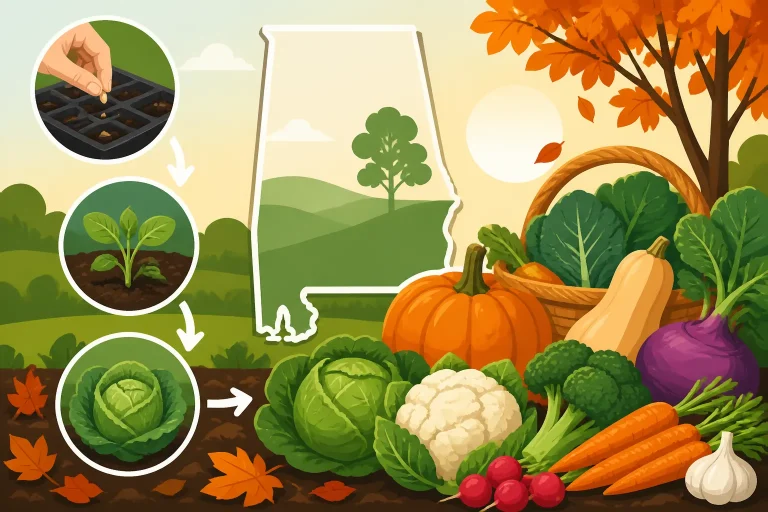
Fall planting is not spring planting reversed. The soil may still be hot when cool-season seeds need to go in, and the crop must establish while the season is moving toward shorter days and cooler conditions. A workable plan accounts for both ends: the heat at sowing time and the cold near harvest.
Southern Alabama often offers a longer period of mild conditions for fall and winter growing, but it can also hold summer heat later. Northern Alabama may cool sooner, making it important to protect the crop’s time to maturity. These broad differences are a reason to choose a regional calendar rather than copy dates from a friend in another part of the state.
Work backward from the intended harvest
For a fall crop, begin with a realistic harvest goal. Check the seed packet or transplant information for days to maturity, then work backward to estimate when sowing or transplanting should happen. Remember that maturity estimates are usually based on favorable conditions. Heat stress, dry soil, pests or slow growth can add time.
Do not calculate from a date alone. Check whether the crop can germinate in current soil conditions and whether seedlings can survive the heat. If you are starting transplants, count back from the intended planting period and allow enough time for sturdy plants—not oversized, root-bound ones.
A useful fallback is to choose a faster-maturing crop when the preferred window has passed. That can be more practical than trying to force a slow crop into a short remaining season. Still, do not assume that every fast crop will succeed under heat or cold stress. Select crops for the conditions they will actually face.
Reduce the heat stress on young seedlings
Hot, drying soil can be difficult for small seeds. Keep the seedbed evenly moist enough for germination, and avoid letting the surface dry out during the critical establishment period. If the bed is exposed to strong afternoon sun, temporary shade may help, but it should not block more light than necessary or remain in place longer than needed.
Watering method matters. A gentle application helps avoid washing seed out of position or crusting the soil surface. Check moisture at the seed depth rather than relying on how the surface looks; the top can dry while deeper soil remains moist, or appear damp while the seed zone is dry. Once plants are established, water according to soil and crop needs rather than a fixed statewide schedule.
If the ground is too hot or dry for reliable emergence, waiting can be a sensible decision. Use the delay to prepare the bed, improve irrigation access and plan the next sowing. The goal is not to plant at the earliest possible moment; it is to get a crop established under conditions it can handle.
Protect the season’s remaining time
As fall advances, track the forecast and local cold-weather estimates. A light frost and a hard freeze are not the same event, and crops vary in their tolerance. Do not assume that a crop will be safe simply because the first frost has not occurred, or that all vegetables must be removed at the first chilly night.
If a cold spell is forecast, consider whether the crop needs protection and whether the protection available is appropriate. Row covers, cloches and other covers can change the temperature around a plant, but they have limits and need to be managed so they do not damage foliage or overheat plants during sunny conditions. Protecting Fall Crops From the First Alabama Freeze and Frost Protection Tips for Alabama’s Mild Winters cover practical ways to think about protection.
To compare how cold-weather windows differ across the state, use How Fall Freeze Windows Differ Across Regional Weather Stations. For a wider regional view, Tracking Fall Frost by ZIP Code: How Alabama Freeze Dates Shift can help explain why a nearby area may not share the same estimate as your own.
A simple system for shifting dates year after year
You do not need a perfect calendar to make better planting decisions. A repeatable process helps you adapt to regional guidance and changing weather without restarting your plan every season.
- Identify the garden’s broad region. Use north, central or south Alabama guidance as your first reference, then narrow it with local information where available.
- Choose a crop and its season. Decide whether the crop is best suited to cool, warm or transitional conditions.
- Check the crop’s specific needs. Review sowing or transplanting guidance, maturity time and sensitivity to heat or cold.
- Assess the garden bed. Check soil moisture, drainage, temperature and exposure. Note whether the bed is shaded, protected, windy or prone to standing water.
- Look at the forecast. Avoid making a major decision based only on a warm afternoon or a calendar date.
- Leave room for setbacks. Treat maturity information and frost estimates as planning tools, not guarantees.
- Record what happened. Note the dates you planted, weather conditions, establishment problems and harvest timing. Use those observations to fine-tune the next season.
A simple garden record does not need to be elaborate. A notebook or spreadsheet with the crop, variety, sowing date, transplant date and outcome is enough to reveal useful patterns. If seedlings repeatedly struggle in one bed, the issue may be drainage, shade, pests or watering rather than the regional calendar. If greens bolt before you can harvest much, your spring window may be closing earlier than you expected.
Use the calendar to make decisions, not to judge yourself. A planting that fails because of an unexpected weather swing does not mean the whole schedule is wrong. A better response is to identify what limited the crop and adjust one factor next time: start earlier within the appropriate window, choose a different crop, improve the bed, or protect the planting when conditions turn.
Most importantly, avoid making a big planting based on a single date copied from another part of Alabama. The state’s regional differences are real, but so are the differences between gardens within the same region. A regional calendar, crop-specific advice, soil observation and a current forecast together provide a much stronger basis for timing.
Frequently Asked Questions
Should I use the same planting calendar throughout Alabama?
No single calendar can reflect every region and garden. Use regional guidance as a starting point, then adjust for crop needs, local weather, soil and yard conditions.
Does a warmer winter mean I can plant every crop earlier?
Not necessarily. A warm spell does not guarantee warm soil or settled weather, and later cold can still damage tender plants. Check the crop’s requirements and the forecast before planting.
Why do fall planting dates sometimes move earlier in northern Alabama?
Some fall crops need time to grow before colder conditions slow growth. Farther north, that can make the remaining growing window a concern sooner. Use local regional guidance and work backward from the crop’s maturity time.
Can I use a neighboring town’s frost estimate?
It can provide context, but it is not a guarantee for your property. Frost dates are probabilities based on historical conditions, and local topography and exposure can affect what happens in a particular yard.
What should I do if I missed the recommended planting window?
Check whether the crop can still mature under the conditions remaining. Consider a faster-maturing crop or wait for the next suitable season rather than forcing a crop into unsuitable heat or cold.
Disclaimer
This article is for general informational purposes only and does not constitute professional advice. Laws, prices and regulations vary by location and change over time. Consult a qualified professional for guidance on your specific situation. Alabama Gardening Guide is not a government agency and is not affiliated with any university extension, state department of agriculture or other government agency.